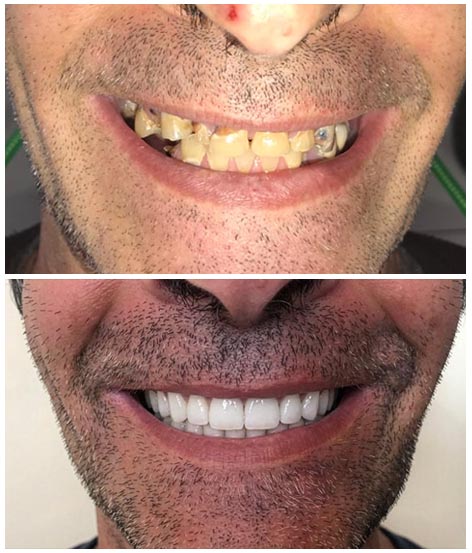
Patient Full-Mouth Reconstruction
Upper and Lower Restoration with Ceramic Zirconia Implants
Treatment at a Glance
- Main treatment: 20 ceramic zirconia implants—10 in the upper jaw and 10 in the lower jaw.
- Final restorations: Fixed zirconia bridges in the upper jaw and a single fixed zirconia bridge in the lower jaw.
- Bone preparation: Bone grafting and sinus lifts on both sides.
Clinical Presentation
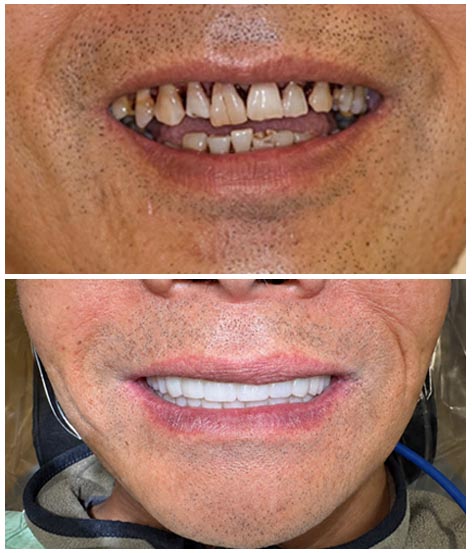
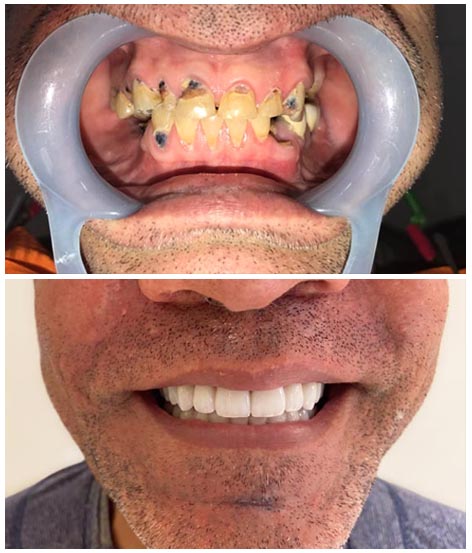
A 54-year-old man presented with advanced periodontal disease, significant bone loss, and multiple loose teeth with a poor long-term prognosis. His goals were to address the active disease, restore comfortable function, and achieve a brighter, more balanced smile.
Treatment
Bone grafting and bilateral sinus augmentation were performed to prepare the sites for implant placement. PRP/PRF platelet therapy and adjunctive ozone irrigation were also incorporated into treatment.
Following an initial healing period, 20 ceramic zirconia implants were placed through staged procedures, with 10 in the upper jaw and 10 in the lower jaw. These implants provided support for fixed restorations in both arches, planned to coordinate the bite and create a natural-looking smile.
Clinical Outcome
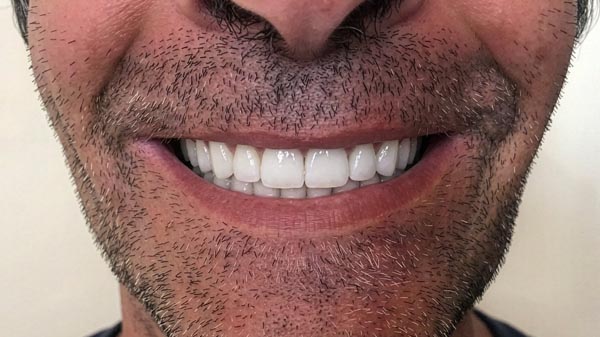
The upper jaw was restored with fixed zirconia bridges, and the lower jaw with a single fixed zirconia bridge. The completed full-mouth reconstruction established a stable bite, restored comfortable function, and created a brighter, more uniform smile with proportions tailored to the patient’s facial features.
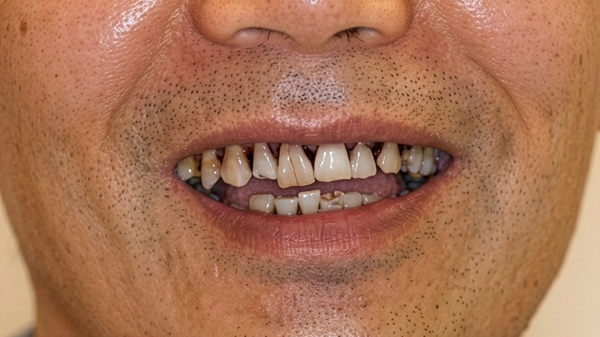
Before
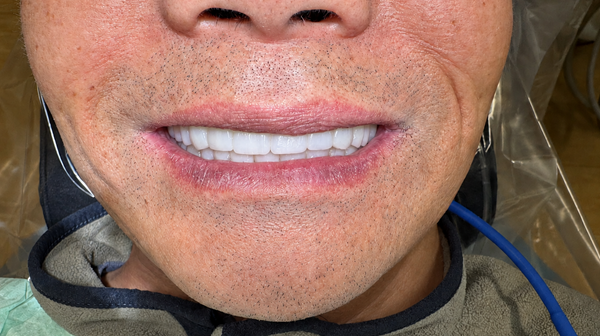
After
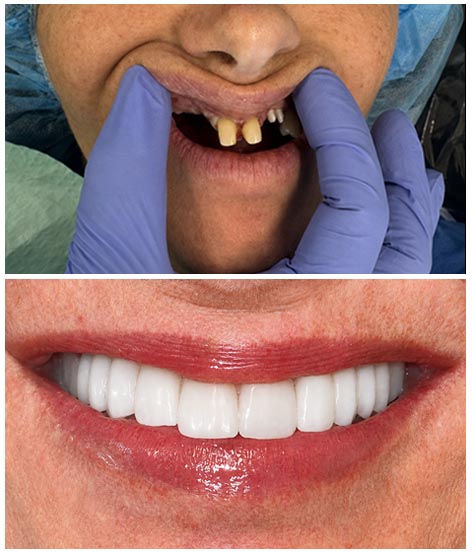
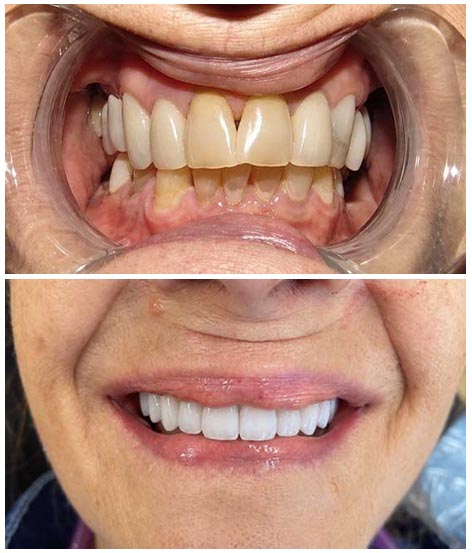
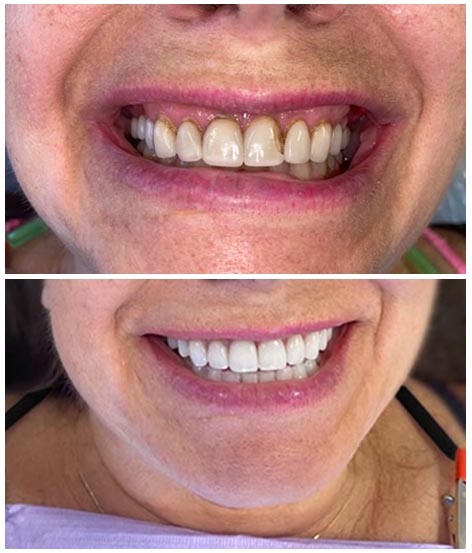
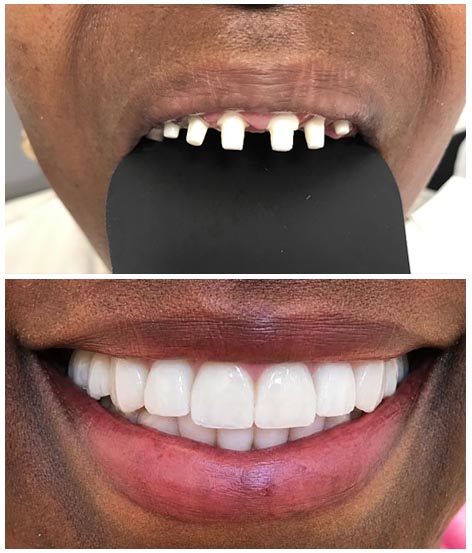
Patient 10-Zirconia-Implants
Upper-Jaw Restoration with Zirconia Implants, Crowns, and Bridges
Treatment at a Glance
- Main treatment: 10 ceramic zirconia implants in the upper jaw.
- Final restorations: 4 individual zirconia crowns in the anterior region and 2 posterior bridges.
- Site preparation: Bone and soft-tissue grafting.
Clinical Presentation
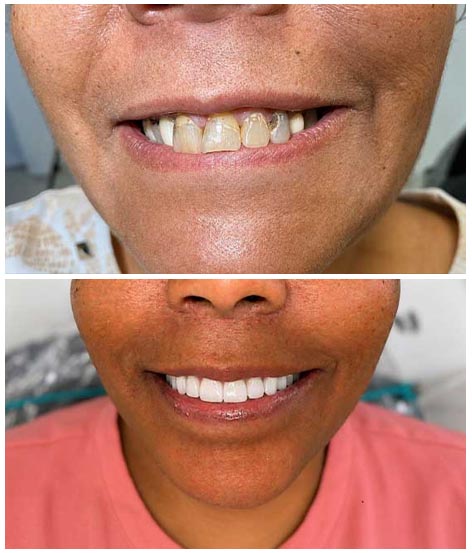
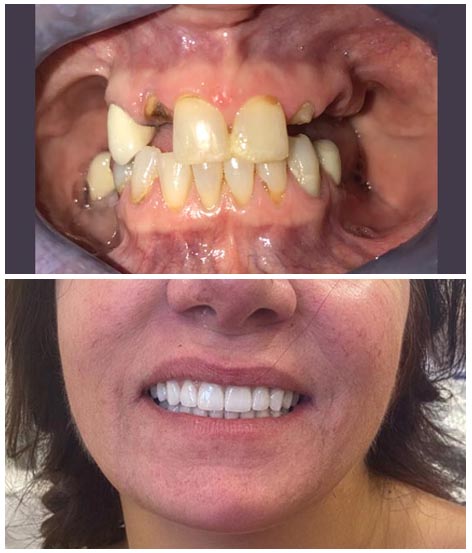
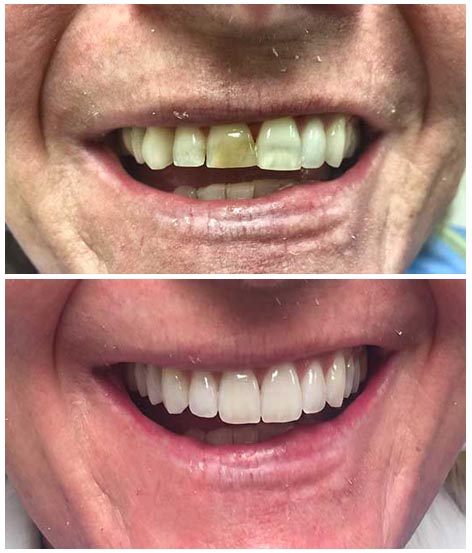
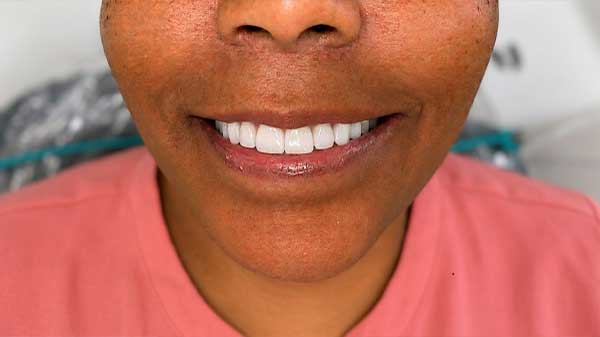
A 67-year-old woman presented with extensive decay and failing restorations affecting her upper teeth. She experienced pain and discomfort, compromised function, and dissatisfaction with the appearance of her smile. Her goals were to address the underlying dental problems, regain comfortable function, and achieve a natural-looking smile.
Treatment
The treatment sites were thoroughly cleaned, and bone grafting and PRP/PRF platelet therapy were performed.
Bone and soft-tissue grafting were performed to prepare the treatment sites and rebuild the supporting tissues. Ten ceramic zirconia implants were placed in the upper jaw to support a combination of individual anterior crowns and posterior bridges.
Clinical Outcome
The completed upper-jaw restoration consisted of four individual ceramic zirconia crowns in the front and two implant-supported bridges in the back. These fixed restorations were designed to support comfortable chewing and create a balanced, natural-looking smile, addressing the functional and aesthetic goals established during treatment planning.
Before
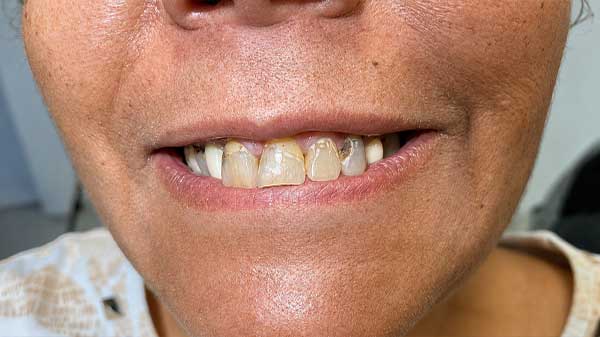
After
Patient All-on-5
Upper and Lower Restoration with Ceramic Zirconia Implants
Treatment at a Glance
- Main treatment: 5 ceramic zirconia implants on both the upper and lower jaw.
- Final restorations: Zirconia crowns and implant-supported bridges.
- Site preparation: Bone and soft-tissue grafting.
Clinical Presentation
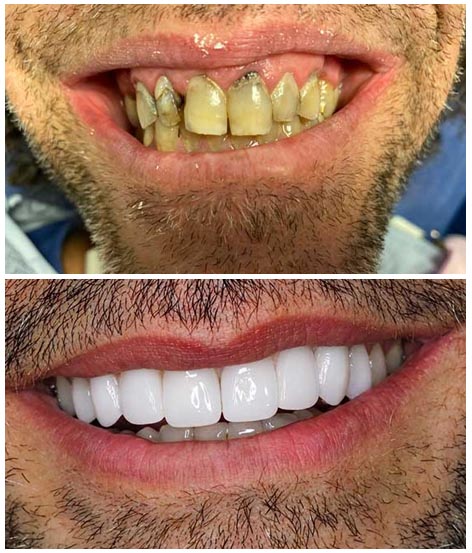
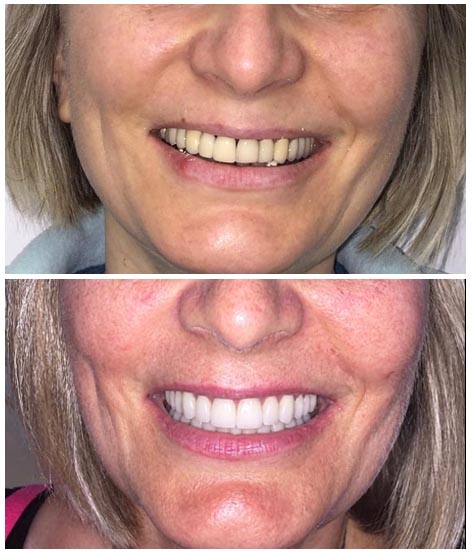
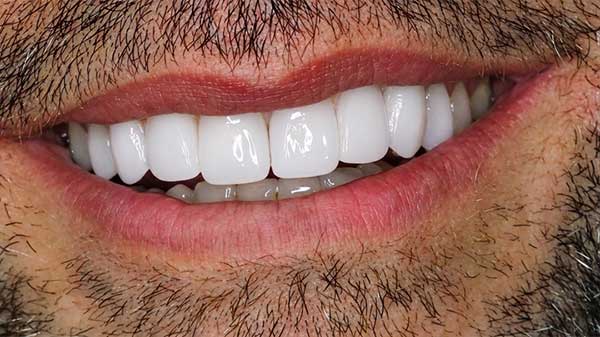
A 52-year-old patient presented with extensive decay and multiple compromised teeth affecting the upper front and back regions, as well as the lower-left back teeth. Several teeth could no longer be predictably restored. His goals were to rebuild a healthy foundation, restore comfortable function, and achieve a balanced, natural-looking smile.
Treatment
Bone and soft-tissue grafting were performed to prepare the sites for implant placement. Platelet therapy and adjunctive ozone irrigation were also incorporated into the surgical care.
A total of 10 ceramic zirconia implants were placed, with 5 on each arch, to support the final restorations.
Clinical Outcome
Following healing and implant integration, zirconia crowns and implant-supported bridges were placed. The completed treatment restored stable chewing function with fixed restorations and created a cohesive smile designed to complement the patient’s facial features.
Before
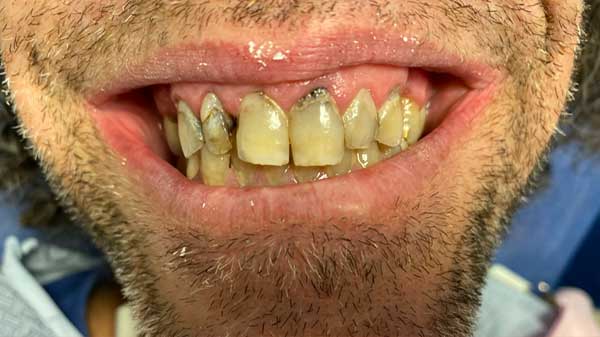
After
Patient 7-Zirconia-Implants
Upper-Jaw Restoration with Zirconia Implants, Crowns, and Bridges a
Treatment at a Glance
- Main treatment: 7 ceramic zirconia implants, with 4 in the upper-right region and 3 in the upper-left region, plus 2 zirconia crowns on natural upper front teeth.
- Final restorations: Two implant-supported zirconia bridges—one 3-unit bridge and one 4-unit bridge—and 2 zirconia crowns on natural teeth.
- Site preparation: Bone and gum grafting.
Clinical Presentation
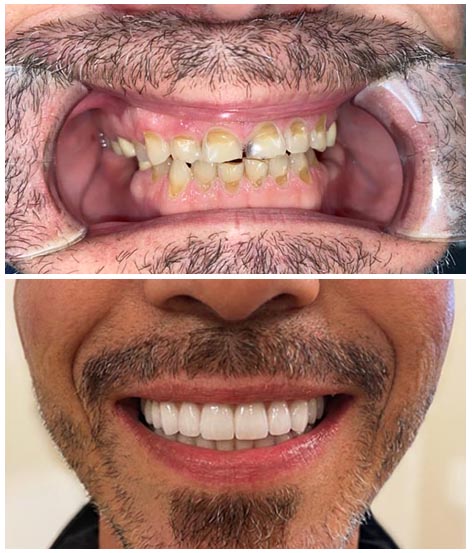
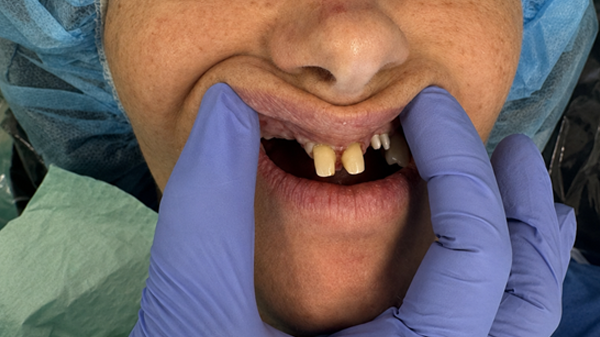
A 64-year-old patient presented with failed root canal treatments and failing bridges affecting the back teeth on both sides of her upper jaw. Her goals were to address the underlying infection, restore comfortable chewing, and preserve the natural character of her smile.
Treatment
The treatment sites were thoroughly cleaned, and bone grafting and PRP/PRF platelet therapy were performed. Gum grafting was also completed to improve the tissue surrounding the planned implant sites.
Seven zirconia implants were placed, with four in the upper-right region and three in the upper-left region. These implants provided support for two separate zirconia bridges. Two natural upper front teeth were also included in the restorative plan for zirconia crowns.
Clinical Outcome
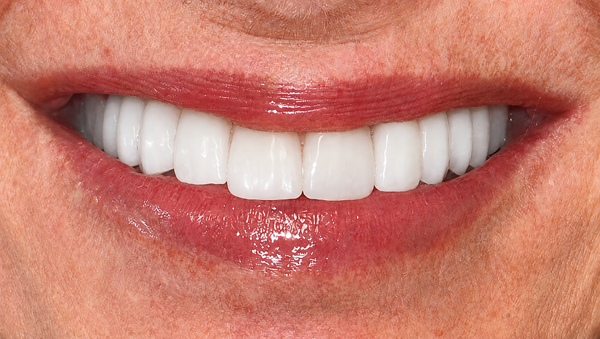
After approximately four to six months of healing, the implants were restored with a three-unit zirconia bridge and a four-unit zirconia bridge. Two additional zirconia crowns were placed on the patient’s natural upper front teeth to create a consistent appearance across her smile.
The completed treatment restored stable chewing function in the upper back teeth while creating a balanced, natural-looking smile that complemented her remaining teeth.
Before
After
Patient All-on-8
Upper-Arch Restoration with Fixed Zirconia Bridges
Treatment at a Glance
- Main treatment: 8 ceramic zirconia implants in the upper jaw.
- Final restorations: 2 fixed implant-supported zirconia bridges.
- Bone preparation: Bone grafting and sinus lifts on both sides.
Clinical Presentation
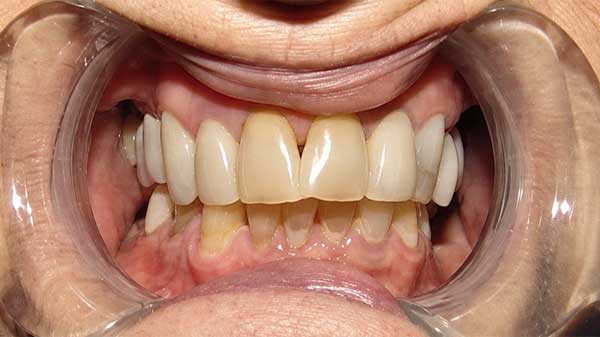
A 79-year-old woman presented with advanced bone loss in the upper jaw, extensive recurrent decay, and multiple failing crowns and bridges. Her remaining upper teeth had a poor long-term prognosis. Her goals were to establish a healthy, stable foundation, restore comfortable function, and achieve a natural-looking smile.
Treatment
Comprehensive clinical and radiographic evaluation guided the treatment plan. Bilateral sinus augmentation and bone grafting were performed to prepare the implant sites, with autologous PRP/PRF platelet therapy and adjunctive ozone irrigation incorporated into the surgical care.
Eight zirconia implants were placed in the upper jaw to support a fixed restoration of the upper arch.
Clinical Outcome
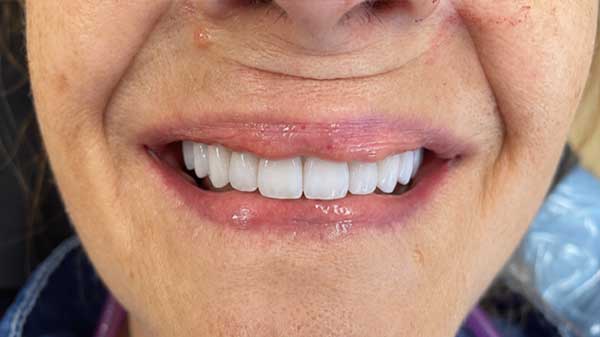
After implant integration and tissue healing were confirmed, two definitive zirconia bridges were placed to complete the upper-arch restoration. Together, these bridges replaced the compromised upper teeth with fixed, implant-supported restorations, providing stable function and a natural-looking smile.
Before
After
Patient Full-Mouth Reconstruction
Upper and Lower Restoration with Zirconia Bridges
Treatment at a Glance
- Main treatment: Planned placement of 11 ceramic zirconia implants—8 upper and 3
lower—with 2 existing lower titanium implants retained.
- Planned restorations: 2 fixed zirconia bridges in the upper jaw and a single fixed
zirconia bridge in the lower jaw.
- Bone preparation: Upper-jaw bone reshaping and anterior bone augmentation for lip
support.
Clinical Presentation
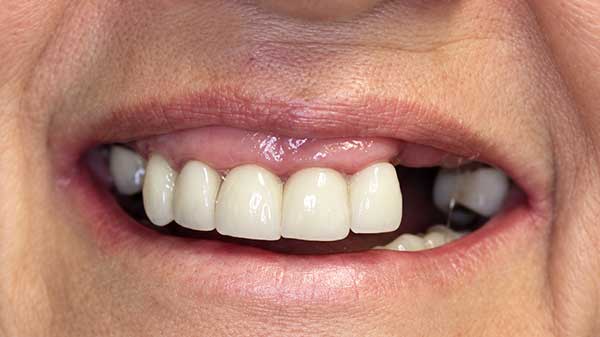
A woman presented with significant dissatisfaction with her existing lower implant-retained
overdenture. She was also missing multiple upper teeth and wanted a comprehensive approach to
restoring both jaws.
Examination identified inflammation around the existing implants, thin surrounding gum tissue,
and bone loss around the lower implants. The treatment plan focused on addressing these
concerns and providing fixed restorations in both arches.
Treatment
The proposed treatment included bone reshaping in the upper jaw and augmentation of the
anterior ridge to improve lip support and prepare the foundation for the planned restorations.
Eight zirconia implants were planned for the upper jaw. In the lower jaw, three new zirconia
implants would work alongside two retained titanium implants, providing five supporting
implants in that arch.
Clinical Outcome
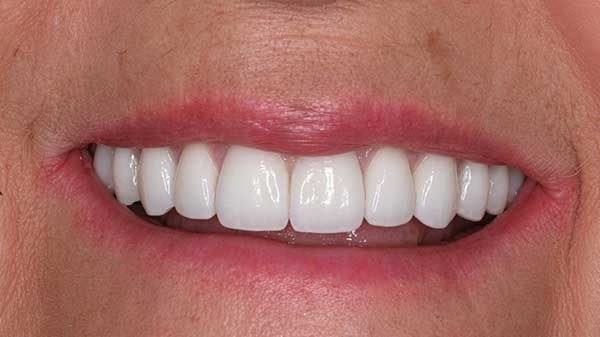
The upper jaw was restored with two fixed zirconia bridges and the lower jaw with a single fixed
zirconia bridge. This approach was designed to replace her lower overdenture with a fixed
restoration while addressing the upper teeth within the same comprehensive plan, with comfort,
function, lip support, and smile appearance guiding the restorative design.
Before
After
Patient All-on-8
Upper-Arch Restoration with Ceramic Zirconia Implants
Treatment at a Glance
- Main treatment: 8 ceramic zirconia implants in the upper jaw.
- Final restoration: A fixed implant-supported upper full-arch bridge.
- Bone preparation: Extensive bone grafting and sinus lifts on both sides.
Clinical Presentation
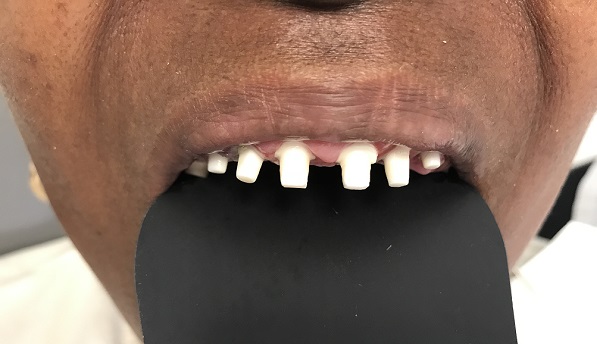
A 54-year-old woman presented wearing removable dentures that she had grown tired of using. She felt that her face was developing a sunken appearance and worried that she was beginning to look older than her age.
She wanted a fixed replacement for her upper teeth that would look natural and help her feel more confident in her smile.
Treatment
Extensive bone grafting and bilateral sinus augmentation were performed to prepare the upper jaw for implant placement.
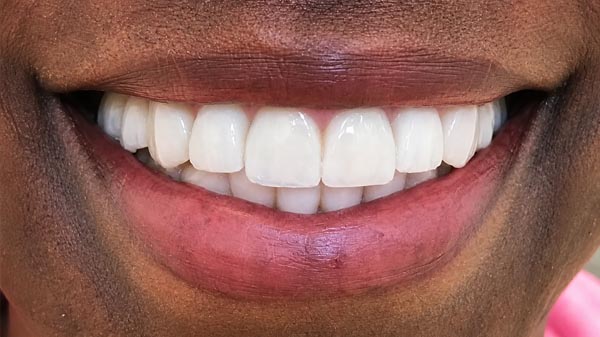
Eight ceramic zirconia implants were placed to support a fixed full-arch restoration. This All-on-8 reconstruction replaced her removable upper denture with implant-supported teeth, with the restoration designed to create a natural-looking smile.
Clinical Outcome
The upper arch was restored with a fixed implant-supported bridge. The patient was delighted with the natural appearance of the final result and the transition from a removable denture to fixed teeth.
She reported feeling more confident than ever and was extremely happy with her new smile.
Before
After
Patient Full-Mouth Reconstruction
Upper and Lower Restoration with Ceramic Zirconia Implants
Treatment at a Glance
- Main treatment: 18 ceramic zirconia implants—10 in the upper jaw and 8 in the lower jaw.
- Final restorations: Fixed implant-supported bridges in both arches.
- Site preparation: Bone and soft tissue grafting.
Clinical Presentation
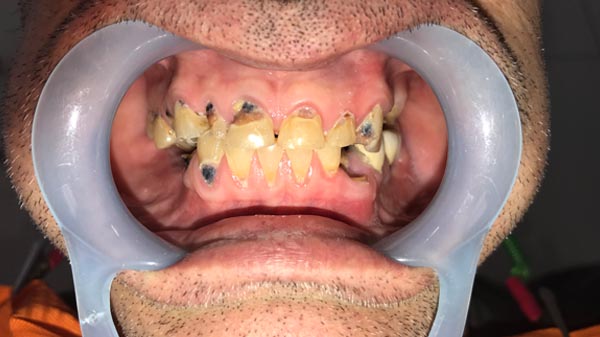
A 54-year-old man presented with pain in the upper-right and lower-right regions, extensive decay, and concerns about the appearance of his teeth. Examination revealed deep gum pockets, widespread tooth mobility, and overerupted teeth.
Significant dental anxiety had contributed to delays in seeking care. He wanted a comprehensive treatment plan that would limit the number of appointments while addressing his dental problems and creating a more consistent smile, particularly in the appearance and color of his teeth.
Treatment
Planning included cone-beam CT imaging and digital scanning to evaluate his existing dentition and guide the full-mouth reconstruction.
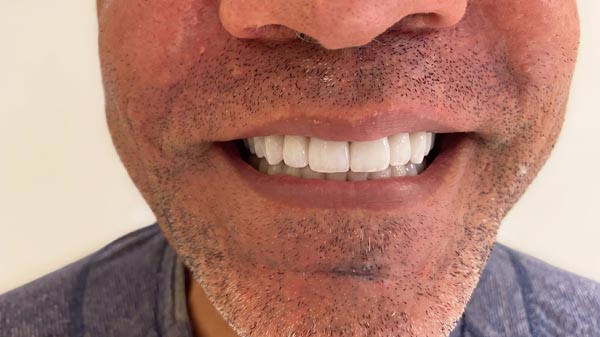
Eighteen ceramic zirconia implants were placed across both arches, with 10 in the upper jaw and 8 in the lower jaw. These implants supported separate fixed bridges that together restored the upper and lower teeth. The restorations were designed to address his functional needs and achieve a coordinated appearance across his smile.
Clinical Outcome
The full-mouth reconstruction was completed with fixed implant-supported bridges in both jaws. The patient and his wife were happy with the final restorations and expressed satisfaction with the completed result.
Before
After
Patient Full-Mouth Reconstruction
Upper All-on-6 Restoration and Lower Implant-Supported Bridges
Treatment at a Glance
- Main treatment: 6 upper-jaw ceramic zirconia implants for an All-on-6 restoration, with additional implants in the lower jaw.
- Final restorations: A fixed upper full-arch bridge and lower implant-supported bridges.
- Site preparation: Bone grafting in both arches, bilateral sinus lifts, and soft-tissue grafting.
Clinical Presentation
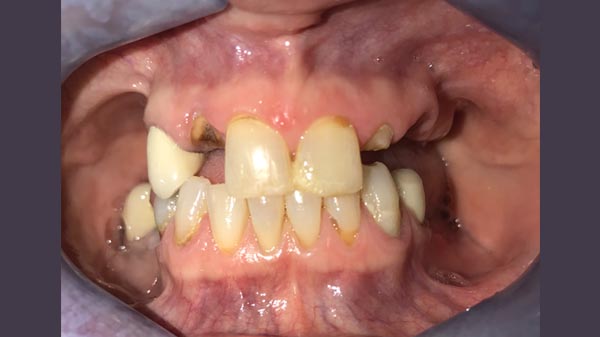
A 57-year-old woman presented with multiple missing teeth and extensive decay affecting her remaining dentition. She struggled to eat and chew comfortably and felt embarrassed by the appearance of her smile.
Her goals were to rebuild function, replace missing and compromised teeth, and regain confidence in her smile.
Treatment
Bone grafting was performed in both the upper and lower jaws to prepare the implant sites. Bilateral sinus augmentation and soft-tissue grafting were also completed, with PRP/PRF platelet therapy incorporated into the surgical care.
Six ceramic zirconia implants were placed in the upper jaw to support a fixed All-on-6 restoration. Additional implants were placed in the lower jaw and restored with fixed bridges, completing the reconstruction of both arches.
Clinical Outcome
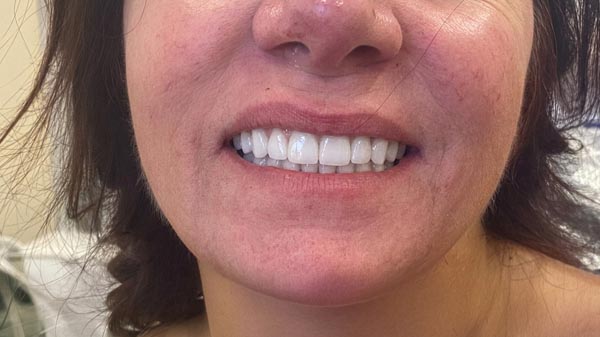
The completed treatment restored comfortable chewing function and improved support for her lips and facial contours. The upper full-arch restoration and lower bridges provided fixed replacement teeth that addressed her functional and aesthetic concerns.
She was happy with the result, loved her smile, and reported greater comfort and confidence following treatment.
Before
After
Patient Full-Mouth Reconstruction
Upper and Lower Restoration with Zirconia Implants
Treatment at a Glance
- Main treatment: 12 ceramic zirconia implants—6 in the upper jaw and 6 in the lower jaw.
- Final restorations: Fixed implant-supported bridges in both arches.
- Bone preparation: Bone grafting with barrier membranes, with sinus augmentation included in the upper-jaw treatment plan.
Clinical Presentation
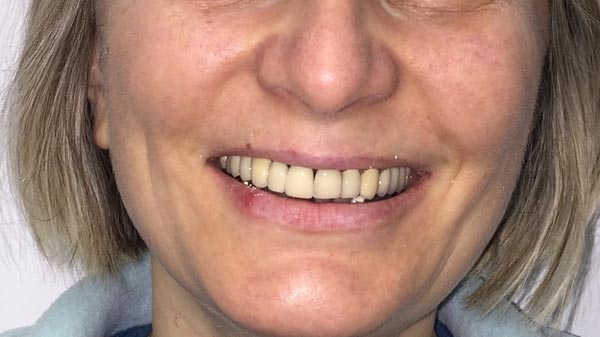
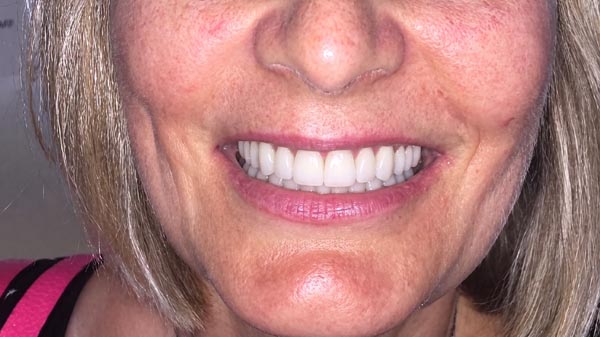
A 57-year-old woman presented with longstanding dental difficulties and significant dissatisfaction with her teeth. Her existing teeth had previously undergone root canal treatment, and examination identified broken crowns and defective restoration margins.
Chronic generalized periodontitis further compromised her dentition. The combination of periodontal disease and failing restorations led to a comprehensive treatment plan addressing both the upper and lower jaws.
Treatment
Surgical planning included hospital-based care under the supervision of an anesthesiologist and sinus augmentation for the upper jaw. Bone grafting and barrier membranes were used around the lower implant sites.
Twelve ceramic zirconia implants were placed, with six in each jaw. These implants supported fixed bridges in both arches, with the restorative design focused on function and a consistent appearance across the smile.
Clinical Outcome
The upper and lower jaws were restored with fixed implant-supported bridges, completing the full-mouth reconstruction. The restorations provided fixed replacement teeth in both arches and were designed to support comfortable function and create a balanced, natural-looking smile.
Before
After
Patient Full-Mouth Reconstruction
Full-Mouth Reconstruction—Crowns, Implants & Bridges
Treatment at a Glance
- Main treatment: Ceramic crowns on the remaining natural teeth in the upper and lower arches
- Tooth replacement: Posterior ceramic zirconia dental implants supporting fixed bridges
- Additional care: Root-canal therapy and lower-jaw gum recontouring
Clinical Presentation
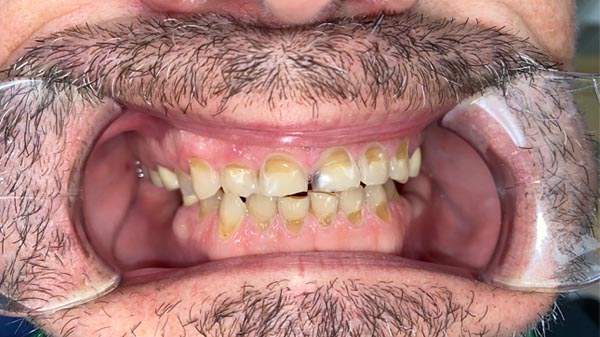
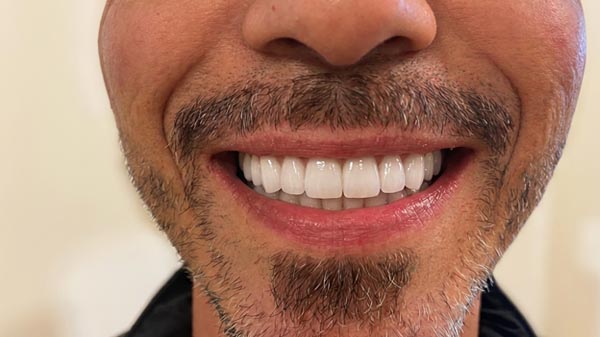
A 45-year-old man presented with a history of dental pain and dissatisfaction with the health, function, and appearance of his smile. He wanted a comprehensive approach to rebuilding his teeth rather than treating each concern separately.
Examination identified extensive decay, loose existing crowns, severe wear of the upper and lower front teeth, lesions near the gumline, and missing teeth in the posterior regions. Two previously root-canal-treated teeth were assessed as failing, while an upper front tooth had deep decay extending into the pulp.
Treatment
The patient’s evaluation included CT imaging, dental radiographs, and an intraoral scan to guide the full-mouth reconstruction.
The remaining natural teeth in the upper and lower arches were restored with ceramic crowns to rebuild worn and damaged tooth structure. Root-canal therapy was completed for the upper front tooth affected by deep decay.
Dental implants were placed in the posterior regions and restored with fixed implant-supported bridges, replacing the missing teeth and re-establishing posterior support. Lower-jaw gum recontouring was also incorporated to create a healthier and more balanced foundation around the restorations.
Clinical Outcome
The completed reconstruction combined ceramic crowns on the remaining natural teeth with posterior implant-supported bridges. Treatment restored continuity across both arches, rebuilt tooth shape and proportions, improved posterior support and chewing function, and created a more consistent, natural-looking smile.
Before
After
Patient Full-Mouth Reconstruction
Restoration with Individual Ceramic Porcelain Crowns and Implant-Supported Bridges on 16 Ceramic Zirconia implants
Treatment at a Glance
- Main treatment: 16 ceramic zirconia dental implants—10 in the upper jaw and 6 in the lower jaw.
- Final restorations: Individual ceramic porcelain crowns in the upper jaw and fixed implant-supported bridges in the lower jaw.
- Site preparation: Bone grafting, sinus augmentation, and soft-tissue grafting.
Clinical Presentation
A 43-year-old man presented with persistent dental pain, extensive decay, bone loss, and multiple loose teeth. Several teeth were severely broken down, with only root tips remaining.
Chewing had become extremely difficult, and he felt embarrassed by the appearance of his teeth. His goals were to address the underlying dental problems, regain comfortable function, and feel confident in his smile.
Treatment
Bone grafting, sinus augmentation, and soft-tissue grafting were performed to prepare the implant sites and rebuild the supporting tissues. PRP/PRF platelet therapy was also incorporated into the surgical care.
Ten ceramic zirconia implants were placed in the upper jaw, each supporting an individual ceramic porcelain crowns. Six implants were placed in the lower jaw to support fixed bridges. Together, these restorations formed a comprehensive reconstruction of both arches.
Clinical Outcome
The completed treatment restored the patient’s ability to chew comfortably. He reported that he was no longer experiencing the dental pain that had affected his daily life.
He was happy with the final restorations and felt confident in his smile, no longer experiencing the embarrassment he had felt before treatment
Before
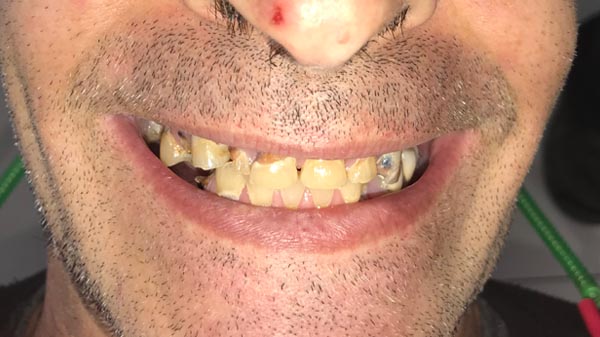
After