
Every dental surgery creates a healing process. A blood clot must form, new tissue must begin to develop, and the surgical site must remain stable while the body repairs the area.
At San Diego Integrative & Implant Dentistry, we use platelet-rich plasma, or PRP, and platelet-rich fibrin, or PRF, during selected dental procedures to support this early healing environment.
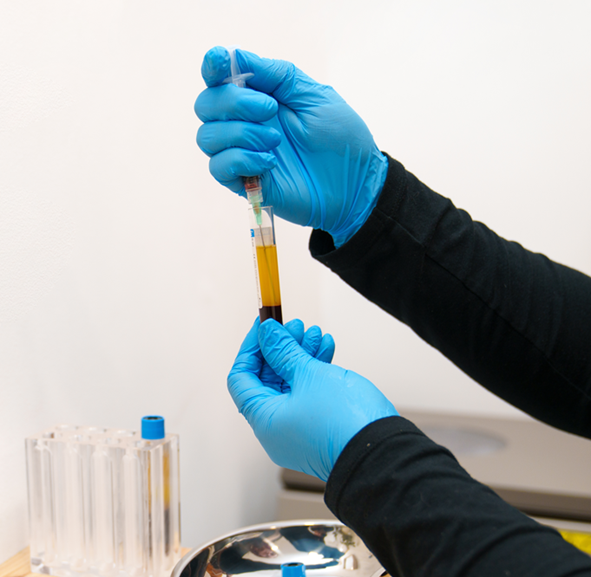
Both are prepared from a small sample of the patient’s own blood. The blood is processed during the appointment to concentrate platelets, fibrin, and natural signaling proteins involved in clotting and tissue repair. The resulting material can then be placed directly into the surgical site, used as a protective membrane, or combined with a bone graft.
Because PRP and PRF come from the patient, they allow us to add a patient-derived biologic layer to procedures such as tooth extraction, bone grafting, implant placement, sinus elevation, wisdom teeth removal, and selected periodontal surgeries.
The technology is simple in concept. Its value lies in knowing how and when to use it.
What Are PRP and PRF?
PRP and PRF are both known as autologous platelet concentrates. Autologous means that the material comes from the same person receiving the treatment.
Platelets are best known for helping blood clot, but they also release proteins that take part in the body’s normal wound-healing process. By concentrating these components and placing them directly where surgery has occurred, PRP and PRF can support the tissues during the earliest stages of recovery.
The two preparations are related, but they are not identical.
Platelet-Rich Plasma
PRP is generally prepared as a liquid. This allows it to be applied directly to a surgical area or blended with particulate bone-grafting material.
Because of its fluid consistency, PRP can coat a graft and move through small spaces within the treatment site. Research comparing platelet preparations suggests that PRP tends to release a larger amount of growth factors earlier in the healing period.
Platelet-Rich Fibrin
PRF contains platelets within a natural fibrin matrix. Depending on the preparation method, it can be shaped into a clot, plug, membrane, or injectable liquid.
The fibrin gives PRF a soft but structured quality. It can be placed over a graft, folded into an extraction site, or used as a protective layer beneath the gum tissue.
PRF also releases growth factors more gradually over time. Modern PRF protocols are typically prepared without the anticoagulants and activators commonly used in traditional PRP preparation, allowing the patient’s blood to form its own fibrin network.
Neither preparation is automatically better for every procedure. The choice depends on whether the surgical site would benefit more from a liquid concentrate, a stable fibrin membrane, or a combination of the two.
Why We Use PRP and PRF in Dental Surgery
The procedure itself is only one part of surgical care. The condition of the site after treatment also deserves attention.
PRP and PRF may be incorporated to:
They do not replace careful surgery, bone grafting, infection control, or appropriate postoperative care. Instead, they complement these parts of treatment and allow us to manage the healing environment more deliberately.
PRF After Tooth Extraction
After a tooth is removed, the extraction socket fills with blood and begins forming a clot. That clot protects the underlying bone and creates the first framework for healing.
PRF can be placed directly into the socket as a soft plug or membrane. It may help stabilize the early clot, support gum healing, and protect the area during the first stage of recovery.
Recent clinical reviews have found that PRF can improve soft-tissue healing after extraction and reduce the incidence of alveolar osteitis, commonly known as dry socket. Some studies have also reported lower postoperative pain, although the degree of benefit varies among patients and procedures.
At our practice, bone preservation is incorporated into nearly every appropriate extraction plan. When a bone graft is placed, PRP or PRF may be used alongside it so that the structural graft and the patient-derived fibrin matrix can support the site together.
PRP and PRF With Bone Grafting
A bone graft provides physical material that supports the shape and volume of a surgical site. PRP and PRF serve a different purpose.
Liquid platelet concentrate can be blended with particulate graft material, creating a more cohesive mixture that is easier to shape and stabilize. PRF membranes may then be placed over the graft to help contain and protect it beneath the gum tissue.
This combination may be used during:
Research on extraction-site preservation has found that platelet concentrates may support new bone formation compared with spontaneous healing alone. Other studies suggest that PRF can contribute to ridge preservation and periodontal regeneration when used in carefully selected procedures.
PRF is not a universal replacement for bone-grafting material, particularly when a larger structural defect must be rebuilt. Its role is usually strongest when it is used as part of a complete grafting protocol.
PRP and PRF in Dental Implant Treatment
Dental implant treatment depends on the condition of the bone and gum tissue surrounding the implant.
PRP or PRF may be used during immediate implant placement, staged implant surgery, bone grafting, or sinus elevation. The material can be placed around the implant site, combined with a graft, or shaped into a membrane beneath the gum tissue.
For patients whose implant treatment begins with extraction, the sequence may include:
Each element has a different purpose. The graft supports the structure of the site. PRP and PRF support the early tissue environment. The implant replaces the missing tooth root. The final crown or bridge restores the visible tooth and its function.
Bringing these parts together within one plan allows the treatment to be adapted to the condition of the individual site.
PRF After Wisdom Teeth Removal and Oral Surgery
PRF may also be placed into selected wisdom-tooth extraction sites and other oral-surgery areas.
After an impacted tooth is removed, PRF can be shaped to fit within the socket before the gum tissue is closed. Its fibrin structure helps support the clot and creates a soft layer within the surgical area.
Clinical research involving wisdom-tooth removal has reported benefits including improved early healing, reduced swelling in some patients, and fewer days of pain-medication use.
The decision to use PRF depends on the depth of the extraction, the size of the socket, the condition of the surrounding tissue, and the patient’s individual treatment plan.
PRF in Periodontal and Gum Procedures
Periodontal surgery often involves delicate gum tissue and, in some cases, defects within the bone supporting the teeth.
PRF may be used during selected procedures to support wound closure, tissue healing, and regenerative treatment. It may be placed beneath the gum tissue, combined with a bone graft, or used as a membrane over the treated area.
Research involving periodontal bone defects has found improved clinical outcomes when PRF is added to selected surgical procedures, particularly when it is combined with careful cleaning and grafting.
For gum-recession treatment, PRF may serve as a supportive adjunct, but it does not automatically replace a connective-tissue graft when additional tissue thickness or predictable root coverage is required.
What to Expect When PRP or PRF Is Used
The process takes place during the dental appointment.
A small sample of blood is drawn, similar to a routine medical blood test. The tubes are placed into a centrifuge, which spins the blood according to a specific protocol and separates the components needed for treatment.
Depending on the procedure, the resulting PRP or PRF may be:
The material is applied before the surgical site is closed. No second surgical area is required to obtain the platelet concentrate.
Patients should still follow all postoperative instructions concerning diet, oral hygiene, smoking, medication, and physical activity. PRP and PRF are designed to support healing, but they do not remove the need to protect the surgical site.
A More Personalized Surgical Protocol
PRP and PRF are not added simply because a procedure is surgical. Their form and placement should reflect what the individual site requires.
Our specialist team considers:
This attention allows PRP and PRF to be used with purpose rather than as a routine label added to every treatment.
For patients, the process is straightforward: a small blood draw during the appointment creates a material that can be placed directly where the body is beginning to heal.
PRP and PRF Dental Treatment in San Diego
San Diego Integrative & Implant Dentistry incorporates PRP and PRF into selected extraction, implant, bone-grafting, wisdom-tooth, sinus, and periodontal procedures.
The treatment is planned by a specialist team that considers the surgical anatomy, tissue condition, grafting needs, implant position, medical history, and final restorative goal before deciding how the platelet concentrate should be used.
Patients visit us from San Diego County, Orange County, Los Angeles, and surrounding communities when they are seeking surgical care that combines established technique with thoughtful, patient-derived biologic support.
Call (858) 779-9292 to schedule a consultation and learn whether PRP or PRF may be appropriate for your treatment.
Frequently Asked Questions About PRP and PRF in Dentistry
What is the difference between PRP and PRF?
PRP is usually prepared as a liquid platelet concentrate and can be applied directly to a surgical area or mixed with grafting material. PRF forms a fibrin matrix that can be shaped into a membrane, clot, plug, or injectable preparation. The form selected depends on the procedure and the needs of the site.
Are PRP and PRF stem-cell treatments?
No. PRP and PRF are platelet concentrates prepared from the patient’s blood. They contain platelets, fibrin, and naturally occurring signaling proteins involved in healing, but they are not stem-cell therapies.
Does PRF replace a bone graft?
Not usually. A bone graft provides structural support and helps maintain or rebuild the shape of a site. PRF may be placed with the graft to support handling, clot stability, soft-tissue healing, and the early surgical environment.
Is the blood draw painful?
The blood draw is similar to a routine blood test and generally takes only a short time. The sample is collected during the appointment and processed before the surgical site is closed.
Can PRF help after a tooth extraction?
PRF may support early soft-tissue healing, clot stability, and postoperative comfort after selected extractions. Research has also found a lower incidence of dry socket in several clinical studies.
Is PRP or PRF used in every dental surgery?
No. The decision depends on the procedure, the condition of the tissues, whether grafting is planned, and the patient’s health history. When it offers a meaningful benefit, it is incorporated into the larger surgical protocol.