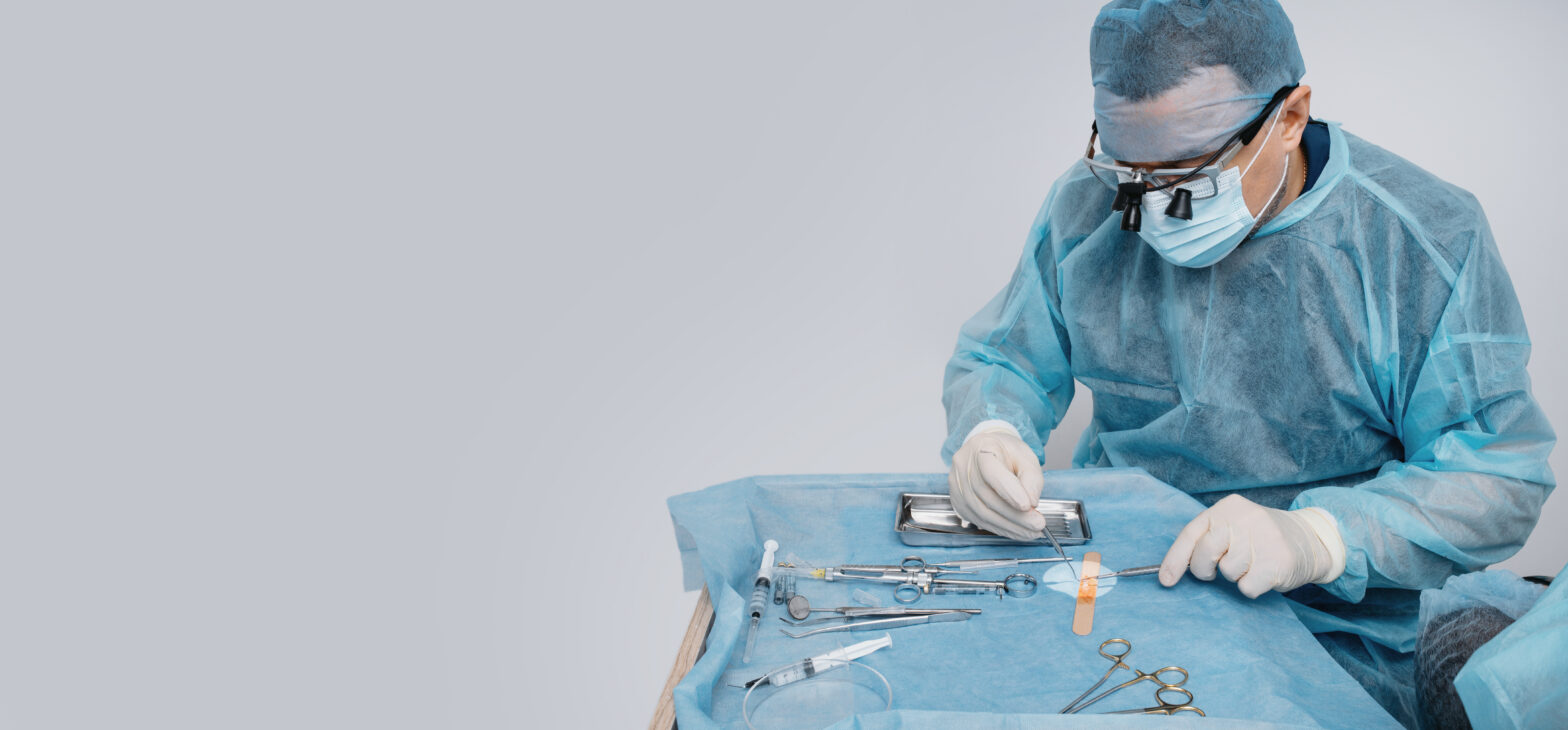

Gum recession changes more than the visible length of a tooth. As the gumline moves away from its original position, the root becomes exposed, the protective tissue around the tooth becomes thinner, and the balance between the tooth, gum, and underlying bone begins to change.
For selected patients, the Pinhole Surgical Technique offers a minimally invasive way to reposition existing gum tissue over exposed root surfaces without harvesting tissue from the palate and without the longer incision pattern associated with traditional grafting.
At San Diego Integrative & Implant Dentistry, pinhole treatment is not approached as a shortcut or a universal substitute for gum grafting. It is selected when the patient’s tissue anatomy, recession pattern, bone support, tooth position, and treatment goals make it the appropriate design.
The small entry point is only one part of the procedure.
The judgment behind it is what makes the treatment precise.
Gum recession occurs when the edge of the gum tissue moves away from the crown of the tooth and exposes part of the root surface.
Patients may notice:
The root surface is not protected by the same enamel that covers the crown of the tooth. Once exposed, it may be more vulnerable to sensitivity, abrasion, and root decay.
Recession may also indicate that the gum tissue is too thin to provide stable long-term protection around the tooth.
Gum recession rarely has one cause.
Common contributing factors include:
Understanding the cause matters because covering the root without addressing the forces or habits that produced the recession can compromise the stability of the result.
A refined procedure begins with a refined diagnosis.
The Pinhole Surgical Technique is a minimally invasive periodontal plastic surgery used to treat selected areas of gum recession.
Rather than removing tissue from the roof of the mouth, the clinician creates a small access point in the gum tissue near the affected teeth. Specialized instruments are introduced through this opening to gently release the tissue from the structures beneath it.
The existing gum tissue is then advanced toward the natural position of the gumline and stabilized over the exposed roots. Collagen strips or another supportive material may be placed beneath the tissue to help maintain the new position during early healing.
The technique often avoids traditional incisions and sutures across the treated teeth.
This can be especially useful when several neighboring teeth have recession and the patient wants to address a broader area within one coordinated procedure.
For the right patient, the Pinhole Surgical Technique may offer several meaningful advantages.
Traditional connective-tissue grafting often uses tissue taken from beneath the surface of the palate.
Pinhole treatment repositions the patient’s existing gum tissue, which can avoid a second surgical site in the roof of the mouth.
The procedure is performed through a limited entry point rather than a longer incision along each tooth.
This can reduce visible surgical disruption and create a more comfortable early recovery for many patients.
The technique may allow several recession defects to be treated through one or a small number of access points.
This can be particularly attractive when the recession extends across a continuous section of the smile.
The tissue is repositioned during the procedure, so patients can often see an immediate improvement in root coverage and gumline continuity.
The tissues then continue to heal, mature, and refine over the following weeks and months.
Pinhole treatment works with the gum tissue already present.
Its value lies in mobilizing that tissue carefully enough to achieve coverage without creating unnecessary tension or trauma.
Pinhole treatment may be considered when a patient has:
The technique may be less suitable when:
The most important decision is not whether pinhole treatment is newer or less invasive.
It is whether the tissue can be moved into a healthier position and remain there.
At San Diego Integrative & Implant Dentistry, the evaluation may include:
The treatment plan also considers the patient’s esthetic expectations.
Some patients want reduced sensitivity. Others want to restore symmetry across the smile. Some require thicker tissue to protect a tooth or implant over time.
The procedure should be designed around the actual objective.
The treatment area is numbed with local anesthetic. Additional comfort options may be discussed according to the number of teeth involved and the patient’s needs.
A small opening is created in the gum tissue. Through this access point, the clinician carefully releases the tissue from the structures beneath it so that it can move without excessive tension.
The gum is then advanced over the exposed root surfaces and refined into a more favorable position.
Collagen strips may be inserted beneath the repositioned tissue to support its contour and stability during early healing. The access point is small and often does not require conventional sutures.
The procedure is completed only after the tissue position, symmetry, stability, and relationship to the neighboring teeth have been evaluated.
In selected cases, platelet-rich fibrin or platelet-rich plasma may be incorporated as an autologous biologic adjunct.
PRF and PRP are prepared from a small sample of the patient’s own blood. They contain a concentrated fibrin or platelet matrix that can be used to support clot stability and the early healing environment.
These therapies do not replace the mechanical requirements of tissue release and stabilization.
They add another layer to a carefully designed periodontal procedure.
Both procedures can address gum recession, but they solve the problem differently.
Pinhole treatment repositions existing gum tissue. Connective-tissue grafting adds tissue from the palate or another donor source.
Pinhole treatment may be appealing when:
Connective-tissue grafting may be preferred when:
A less invasive technique is valuable when it can produce the tissue quality the site requires.
When it cannot, a graft may be the more sophisticated choice.
Patients receive procedure-specific instructions, but common recommendations may include:
Mild swelling, tenderness, or bruising may occur. Many patients return to lighter daily activities relatively quickly, although tissue maturation continues beyond the first few days.
The repositioned gum tissue must remain undisturbed while its blood supply reorganizes.
Patience protects the result.
Pinhole treatment is designed as a long-term correction, but the stability of the result depends on the condition that produced the recession.
Long-term maintenance may include:
No gum-recession procedure can remain stable indefinitely if the original trauma continues.
The surgical result and the maintenance plan must support each other.
San Diego Integrative & Implant Dentistry offers the Pinhole Surgical Technique as one of several approaches to gum recession.
Our specialist group evaluates the tissue phenotype, recession pattern, bone support, tooth position, bite, and esthetic objectives before recommending pinhole treatment, connective-tissue grafting, another grafting technique, or nonsurgical care.
Patients from San Diego, Rancho Bernardo, 4S Ranch, Poway, Rancho Peñasquitos, Escondido, San Marcos, and surrounding communities may schedule a periodontal evaluation.
Call (858) 779-9292 to arrange a consultation.
The area is numbed with local anesthetic during treatment. Patients may experience mild tenderness, swelling, or bruising afterward, but the absence of a palatal donor site can make early recovery more comfortable for many people.
The technique often avoids conventional sutures across the treated teeth. Collagen strips or other supportive materials may be placed beneath the tissue to help stabilize it while healing begins.
Yes. One of the principal advantages of the technique is that multiple adjacent recession defects may be addressed within one coordinated procedure when the anatomy is favorable.
Neither procedure is universally better. Pinhole treatment repositions existing tissue, while a connective-tissue graft adds thickness and volume. The appropriate choice depends on the tissue available, the depth of recession, bone support, tooth position, and the long-term objective.
The procedure repositions existing gum tissue over exposed roots. The tissue then heals and matures in its new position. Long-term stability depends on oral hygiene, brushing technique, bite forces, tissue quality, and maintenance.
Selected soft-tissue concerns around implants may be treated with minimally invasive tissue-repositioning techniques, but implant sites require their own evaluation. Tissue thickness, implant position, bone support, and the restoration all influence the appropriate procedure.