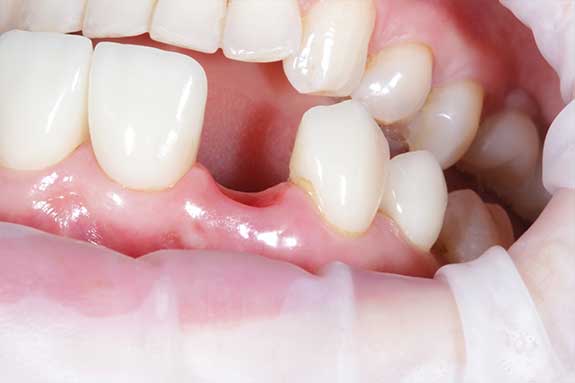
San Diego Integrative & Implant Dentistry provides Tooth Extractions for patients in San Diego, Rancho Bernardo, Poway, Escondido.
Tooth Extraction in San Diego
Atraumatic Removal
Bone Preservation, and Implant Planning
A tooth can be removed quickly. Preserving what surrounds it requires more thought.At San Diego Integrative & Implant Dentistry, tooth extraction is not treated as an isolated procedure. It is approached as the first stage of a larger surgical and restorative plan—one that considers the bone, gum tissue, bite, esthetics, healing environment, and what the site may need to support in the future.Our specialist group uses atraumatic extraction techniques designed to remove the tooth with the least avoidable disruption to the surrounding socket walls and soft tissue. We then determine how the site should be managed: with bone grafting, PRF or PRP, ozone-assisted care, immediate implant placement, staged implant treatment, another form of tooth replacement, or no replacement at all.The objective is not simply to remove a compromised tooth.It is to leave the patient with the strongest possible foundation for what comes next.
When Is Tooth Extraction Necessary?
A tooth may need to be removed when decay, infection, fracture, periodontal disease, or another condition has progressed beyond what can be restored predictably.Common reasons for tooth extraction include:
Extensive decay that has destroyed too much tooth structure
A deep crack or fracture extending beneath the gumline
A dental infection that cannot be predictably resolved while preserving the tooth
Advanced periodontal disease with severe loss of bone support
A failed or repeatedly symptomatic tooth after previous treatment
An impacted or partially erupted wisdom tooth
A retained root or nonfunctional tooth
A cyst, lesion, or another condition involving the tooth or surrounding bone
Crowding or another orthodontic indication
A tooth that interferes with a larger surgical or restorative treatment plan
Pain alone does not necessarily mean that a tooth must be extracted. Likewise, the absence of pain does not mean that a severely compromised tooth should remain untreated.The decision depends on the quality of the remaining tooth structure, the condition of the root, the surrounding bone and gum tissue, the likelihood of successful restoration, and the patient’s long-term goals.
Can the Natural Tooth Be Saved?
Before recommending extraction, we first determine whether preserving the natural tooth offers a reasonable long-term prognosis.Depending on the condition of the tooth, alternatives may include:
A filling
A ceramic onlay or crown
Root-canal treatment
Periodontal treatment
Repair or replacement of an existing restoration
Another structural or restorative procedure
Saving a natural tooth is valuable when the foundation can support a predictable result. But preservation should not become repeated treatment without a rational endpoint.A procedure may be technically possible while still offering limited durability because too little healthy structure remains. In those circumstances, extraction and planned reconstruction may provide the more coherent path.
What Is an Atraumatic Tooth Extraction?
The term atraumatic extraction does not mean that a tooth can be removed without any effect on the surrounding tissues. Every extraction involves separating the tooth from the ligament and bone that hold it in place.Atraumatic extraction means that the procedure is performed with controlled, tissue-conscious techniques intended to minimize unnecessary damage.The clinical priorities include:
Preserving the facial and lingual socket walls
Limiting unnecessary pressure against thin bone
Protecting the gum tissue and papillae around the tooth
Avoiding excessive expansion of the extraction socket
Separating roots when removing the tooth in one piece would require excessive force
Following the natural path of removal
Preserving anatomy that may be needed for grafting or implant placement
Removing residual infection or inflammatory tissue without sacrificing healthy bone
Some teeth can be removed intact. Others are more safely divided into smaller sections so each root can be removed along a controlled path.This may take longer than attempting to force the entire tooth out at once. That additional time is intentional.In extraction surgery, patience is a form of precision.
San Diego Integrative & Implant Dentistry
Schedule a consultation
The bone immediately surrounding a tooth can be thin, particularly along the facial side of front teeth and premolars. Once damaged or fractured, this bone may be difficult to reconstruct completely.Preserving the socket walls can help:
Maintain the natural shape of the ridge
Support the gum tissue
Improve the foundation for a future implant
Reduce the extent of later grafting
Protect the esthetic contours of visible areas
Preserve more restorative options
A bone graft can support the extraction site, but it should not be expected to compensate for avoidable surgical damage.Bone preservation begins with how the tooth is removed.
Bone Grafting Is Built Into Most of Our Extraction Plans
At San Diego Integrative & Implant Dentistry, bone preservation is not treated as an afterthought.We incorporate socket grafting into nearly every extraction plan unless the type of tooth, anatomy of the site, medical considerations, or patient’s long-term treatment goals provide a clear reason not to.Our default is to leave patients with more options, not fewer.After a tooth is removed, the surrounding ridge naturally begins to remodel. A socket-preservation graft is placed within the extraction site to support the space previously occupied by the root and help maintain the architecture of the ridge as healing occurs.This can be particularly valuable when:
A dental implant is planned
The patient may consider an implant in the future
The tooth is located in a visible area
The facial bone is thin
Infection or a defect has affected the socket walls
Maintaining gum and bone contours is important
Avoiding a more extensive graft later is a priority
Even when a patient has not yet decided how the tooth will be replaced, preserving the site may protect future choices.Bone grafting is not required after every wisdom-tooth extraction or in every clinical situation. It is recommended because it contributes something meaningful to the treatment plan—not simply because a tooth has been removed.No graft can prevent every natural change in the jaw. Its purpose is to manage those changes more deliberately.
How PRF and PRP May Be Used After Extraction
Bone grafting addresses the structural dimensions of the site. PRF and PRP address another part of the surgical environment.Platelet-rich fibrin, or PRF, and platelet-rich plasma, or PRP, are autologous biologic adjuncts prepared from a small sample of the patient’s own blood.The blood is processed to concentrate platelets and other components involved in normal clot formation and tissue repair. Depending on the procedure, PRF or PRP may be used with the bone graft, placed within the extraction site, or incorporated into the soft-tissue closure.Their role may include:
Supporting clot stability
Helping manage the graft within the socket
Supporting early soft-tissue healing
Providing a patient-derived fibrin matrix
Complementing the biological environment of the surgical site
PRF or PRP does not replace the bone graft when structural grafting is needed. It adds another layer to the protocol.The value lies in coordination.
Ozone-Assisted Surgical Care
Ozone is incorporated into our dental surgical protocols as an additional localized microbial-control step.After the tooth has been removed and the site has been carefully debrided, ozone may be used within the surgical area before grafting, biologic support, or closure.Its role is to complement:
Removal of diseased or inflammatory tissue
Surgical irrigation
Bone-graft placement
PRF or PRP
Careful tissue handling
Appropriate postoperative care
Ozone does not replace meticulous surgery. It refines the treatment environment in which healing is asked to occur.
What Happens During an Atraumatic Tooth Extraction?
Before treatment begins, the clinician evaluates the tooth, root anatomy, surrounding bone, gum tissue, nearby structures, and the patient’s medical history.Dental X-rays or three-dimensional imaging may be used when the root shape, condition of the bone, maxillary sinus, nerve location, or future implant plan requires greater detail.
Local Anesthesia and Patient Comfort
The area is thoroughly numbed with local anesthetic. Patients with dental anxiety can discuss available comfort measures before the procedure.Pressure and movement may be noticeable, but sharp pain should not be felt. Patients should communicate immediately if they experience discomfort during treatment.
Controlled Tooth Removal
The tooth is carefully loosened and removed while limiting unnecessary force against the socket walls.When the anatomy requires it, the tooth or roots may be divided into controlled sections. This allows the clinician to remove each portion along a more favorable path rather than placing excessive pressure on the surrounding bone.
Site Evaluation and Debridement
After the tooth is removed, the socket is inspected.Residual inflammatory tissue, infection, cystic material, or other compromised tissue may be removed. The site is irrigated and evaluated to determine whether the surrounding walls are intact and what form of preservation or reconstruction is appropriate.
Grafting, PRF or PRP, and Closure
In most cases, the extraction socket is grafted to support the ridge.PRF or PRP may then be incorporated according to the anatomy and treatment plan. The gum tissue may be stabilized with sutures, and detailed postoperative instructions are provided.The procedure is complete only when the site has been prepared for the next phase of care.
What Happens After the Tooth Is Removed?
There is no single treatment sequence that is appropriate for every extraction.Depending on the patient’s anatomy, bone quality, infection, bite, material preferences, esthetic priorities, and restorative goals, treatment may follow several different paths.
Immediate Implant Placement
An immediate implant is placed into the extraction site during the same appointment in which the tooth is removed.This may reduce the number of surgical procedures and shorten the overall treatment sequence for a qualifying patient.Immediate placement may be considered when:
The surrounding bone can support the implant
The site can be thoroughly cleaned
The implant can achieve sufficient initial stability
The position can be planned according to the final restoration
The gum and bone architecture can be managed predictably
The patient’s health and bite are appropriate
Immediate placement is not simply a matter of placing an implant into the space left by the root.The implant must be positioned according to the location, angle, depth, contour, and function of the future tooth. This is where surgical and restorative planning must become one decision.
Immediate Placement and Immediate Loading Are Not the Same
Patients often assume that placing an implant on the day of extraction automatically means receiving a fully functional permanent tooth that day.These are separate decisions.Immediate implant placement describes when the implant fixture is placed into the jawbone.Immediate provisionalization describes the placement of a temporary tooth or bridge shortly after implant placement. In some cases, the temporary restoration is intentionally kept out of heavy biting contact while the implant heals.Immediate loading means that a restoration is connected and permitted to function within the early period after implant placement.A patient may therefore receive:
An implant on the day of extraction with no temporary tooth attached
An implant with a temporary tooth that is protected from heavy bite forces
An immediately loaded temporary restoration when stability and the treatment design permit
A temporary removable restoration while the implant heals
A fixed provisional bridge in a qualifying full-arch case
A graft only, followed by implant placement later
The definitive crown or bridge is usually delivered after the implant and surrounding tissues have completed the appropriate healing phase.Speed is valuable only when the biology and mechanics support it.
Staged Implant Placement
In many cases, the more predictable plan is to remove the tooth, preserve the socket with grafting, allow the site to heal, and place the implant later.A staged approach may be selected when:
Additional bone formation is needed
The socket walls are compromised
The implant cannot achieve sufficient initial stability
Infection or inflammation requires careful management
The gum tissue requires reconstruction
The anatomy is not favorable for immediate placement
The patient’s medical condition supports a more deliberate sequence
A ceramic implant or another specific restorative design requires different timing
The esthetic or functional plan benefits from staged treatment
Staged treatment is not a lesser option. It is often the more sophisticated choice when the site needs time before it can support an implant predictably.
Ceramic and Titanium Implant Options
When implant replacement is appropriate, San Diego Integrative & Implant Dentistry offers both ceramic zirconia and titanium implant pathways.The implant fixture is the component placed within the jawbone. The visible tooth is a separate crown or bridge.A patient can therefore have:
A zirconia ceramic implant supporting a ceramic crown
A titanium implant supporting a zirconia crown
Titanium implants supporting a full-arch zirconia bridge
A completely ceramic implant foundation in a qualifying treatment design
The choice between ceramic and titanium depends on more than a general preference for one material.We consider:
Available bone volume
Implant position and dimensions
Gum-tissue thickness
Bite forces
The esthetic location
Restorative space
Implant and connection design
Immediate or staged treatment timing
Long-term maintenance
The patient’s material preferences
The needs of the final crown or bridge
No single implant material is appropriate for every site.Our role is to understand what the patient values, determine what the anatomy can support, and recommend the system that creates the most coherent treatment plan.
Sometimes the Right Plan Does Not Include an Implant
Not every extracted tooth must be replaced with a dental implant.An implant may not be necessary when:
A wisdom tooth or another nonfunctional tooth is removed
Orthodontic treatment will close the space
A fixed bridge is more appropriate
A removable partial denture is preferred
The patient is not medically or anatomically suited for an implant
The patient does not wish to replace the tooth
The location of the missing tooth does not meaningfully affect function or stability
A sophisticated treatment plan is not defined by how many procedures it includes.It is defined by whether each procedure has a clear purpose.
Why Specialist Coordination Matters
An extraction may appear to be a single surgical event. In reality, it can influence every phase that follows.Our specialist group coordinates the extraction with:
Bone and soft-tissue preservation
Graft selection
PRF or PRP
Ozone-assisted care
Ceramic or titanium implant planning
Immediate or staged placement
Temporary tooth design
Bite management
Definitive crown or bridge fabrication
Long-term maintenance
The final tooth is considered before the compromised tooth is removed.This allows the surgical site to be managed according to what it may eventually need to support, rather than asking the restorative treatment to adapt to whatever anatomy remains afterward.The difference is not simply who can remove a tooth.It is who can anticipate what the site must become.
What to Expect During Recovery
Every extraction is different. A straightforward removal may produce relatively mild symptoms, while a difficult surgical extraction, grafting procedure, or immediate implant may require a longer recovery.The instructions provided by your surgical team should take priority over general online guidance.
Protecting the Blood Clot
A blood clot forms within the extraction socket and provides the foundation for early healing.Bite with steady pressure on the gauze for the period recommended by your clinician. Avoid repeatedly removing it to inspect the area.During the first 24 hours, avoid:
Forceful rinsing
Vigorous spitting
Drinking through a straw
Smoking or vaping
Alcohol
Strenuous exercise
Touching the socket with the tongue or fingers
Very hot food or beverages
Food and Oral Hygiene
Choose soft, nourishing foods and chew away from the surgical site.Continue cleaning the other teeth gently. Beginning the following day, brushing and gentle warm saltwater rinses may usually resume around—but not aggressively within—the extraction site unless different instructions are provided.
Pain and Swelling
Some soreness and swelling are expected.A cold pack may be used against the outside of the face during the first day according to the instructions provided. Take medications only as directed.Swelling may become more noticeable during the first two to three days before gradually improving.
When to Contact the Office
Contact the office promptly for:
Heavy bleeding that does not respond to firm pressure
Pain that continues to intensify
Severe or rapidly increasing swelling
Fever
Pus, drainage, or a persistent foul taste
Repeated vomiting
A suspected medication reaction
Persistent numbness or altered sensation
A concern involving the graft, sutures, implant, or temporary restoration
Call 911 or go to the nearest emergency room for difficulty breathing or swallowing, rapidly spreading facial or neck swelling, serious facial trauma, loss of consciousness, or bleeding that cannot be controlled.
Tooth Extraction and Bone Preservation in San Diego
At San Diego Integrative & Implant Dentistry, extraction is not treated as the end of care.We begin by determining whether the natural tooth can be preserved. When removal is the more appropriate path, we use atraumatic techniques to protect the surrounding anatomy and incorporate bone grafting into nearly every appropriate extraction site.PRF, PRP, ozone, ceramic and titanium implants, immediate treatment, staged treatment, and non-implant options are then coordinated according to the patient—not applied as a standardized package.Patients visit our specialist group from San Diego County, Orange County, Los Angeles, and surrounding Southern California communities when they are seeking a more deliberate approach to extraction, grafting, implant treatment, and restorative planning.A comprehensive evaluation allows us to assess the tooth, surrounding bone, health history, tissue condition, material preferences, and long-term goals before recommending the appropriate sequence.Contact San Diego Integrative & Implant Dentistry to schedule an evaluation.
Frequently Asked Questions About Tooth Extraction
What makes an extraction atraumatic?
An atraumatic extraction uses controlled techniques intended to reduce unnecessary injury to the socket walls and gum tissue. This may include carefully releasing the tooth, separating roots, removing sections individually, and avoiding excessive force against thin bone. The objective is to preserve as much useful anatomy as possible.
Do you place a bone graft after every extraction?
We incorporate bone grafting into nearly every extraction plan when preserving the ridge, future implant options, gum contour, or restorative anatomy provides a meaningful benefit. Certain wisdom teeth, nonfunctional sites, medical considerations, or treatment plans may not require grafting.
Can an implant be placed at the same time as the extraction?
Yes, in selected cases. Immediate implant placement depends on the condition of the socket, remaining bone, ability to clean the site, implant stability, final restoration, bite, and overall treatment plan. When these conditions are not favorable, grafting and staged implant placement may provide the better result.
Does immediate implant placement mean I receive a tooth the same day?
Not necessarily. Immediate placement refers to placing the implant fixture on the day of extraction. A temporary tooth may be placed immediately, kept out of heavy biting contact, delivered later, or omitted while the implant heals. The timing depends on implant stability and the restorative design.
Should I choose a ceramic or titanium implant?
Both materials can provide strong implant foundations in appropriately selected patients. The decision depends on the anatomy, bone volume, tissue, bite, implant design, restorative needs, treatment timing, and the patient’s material preferences. The choice should be made within the complete treatment plan rather than from the material name alone.
What is the role of PRF or PRP after extraction?
PRF and PRP are prepared from the patient’s own blood and may be used as biologic adjuncts within the extraction site. They can support clot stability, soft-tissue management, and the handling of a bone graft. They complement rather than replace the structural role of grafting when a graft is needed.