
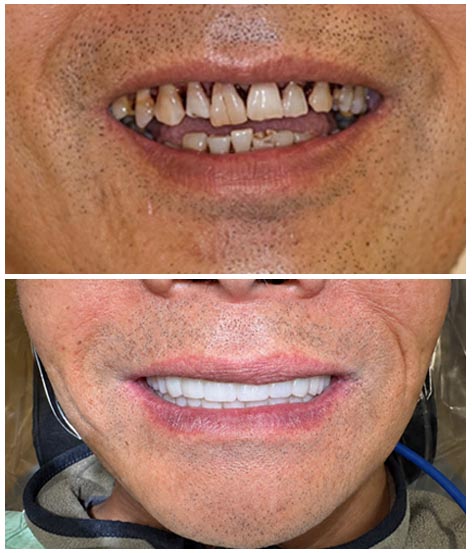
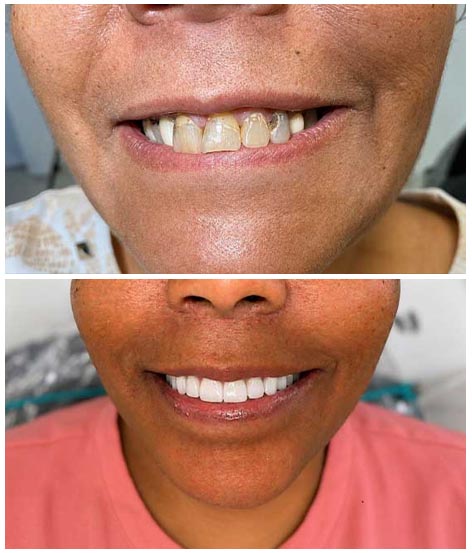
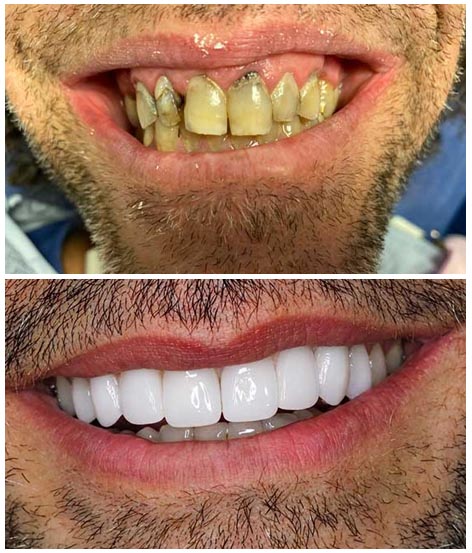
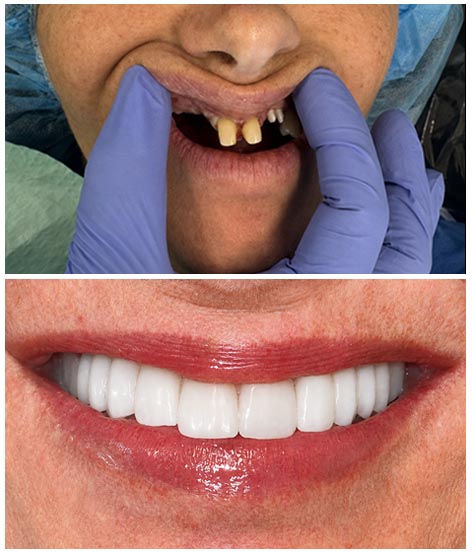
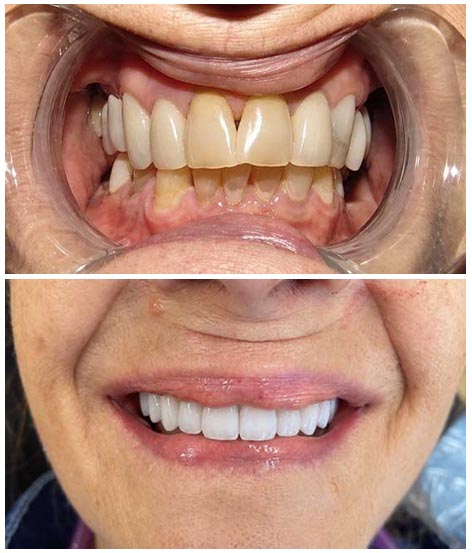
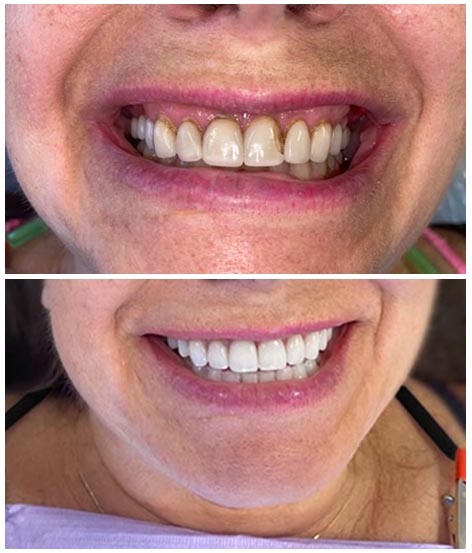
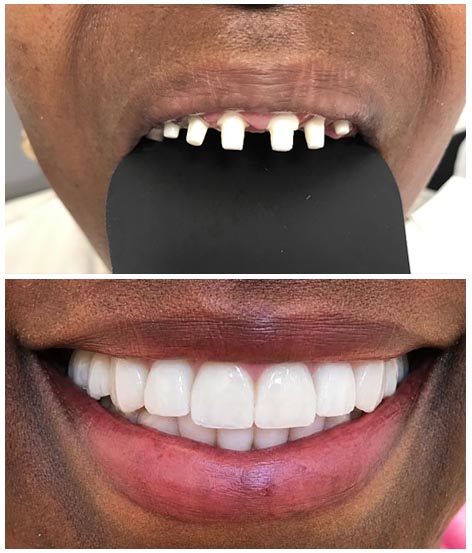
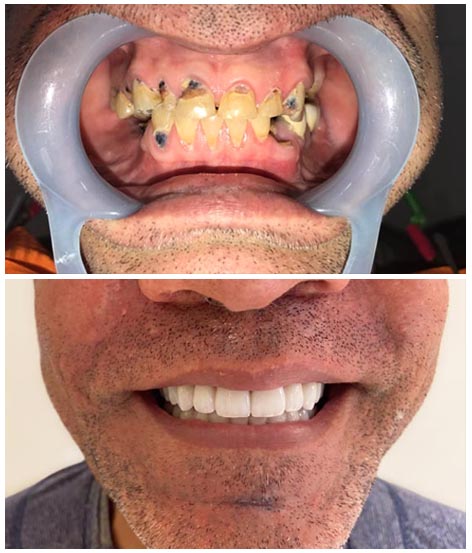
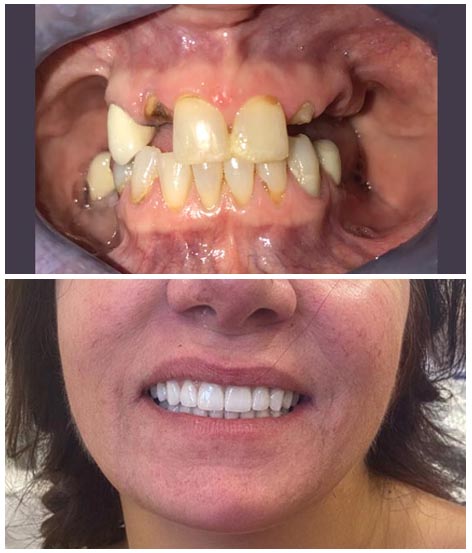
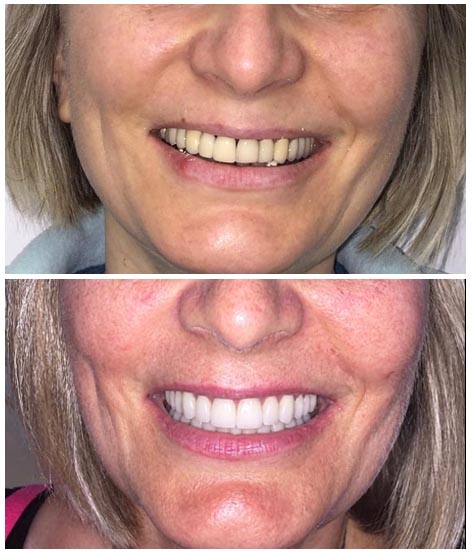
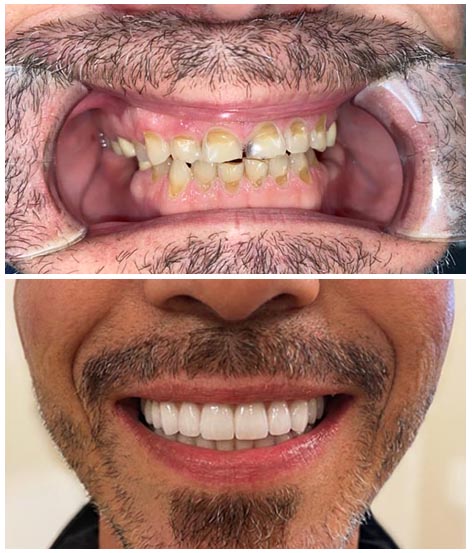
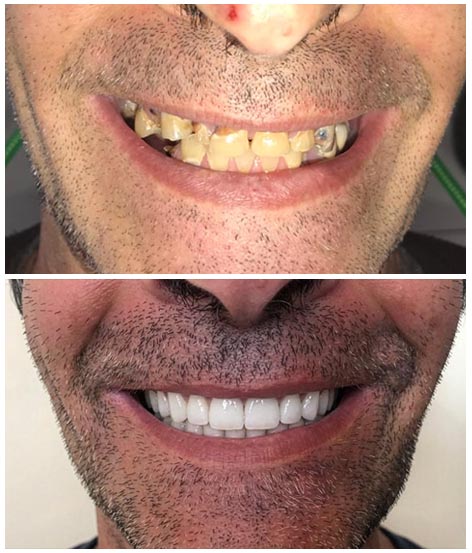
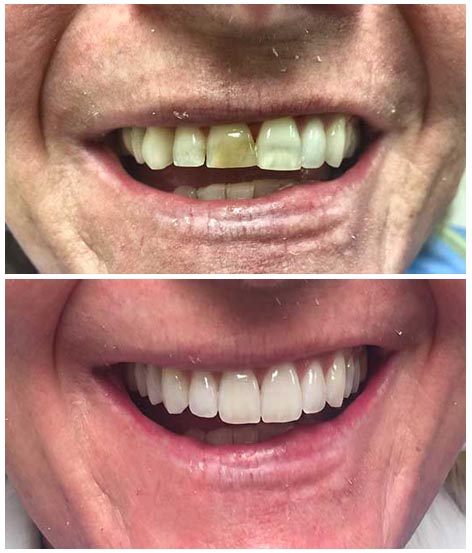
Ceramic Zirconia implants are among the most esthetically refined options in modern implant dentistry. Their naturally white color, metal-free composition, and ability to support beautifully integrated ceramic restorations make them especially appealing to patients who care about both material choice and the final appearance of their smile.
The white color is particularly valuable in visible areas and beneath thin or delicate gum tissue. Clinical research has shown that zirconia components can create less visible color change through thin gum tissue than gray titanium, helping support a more natural appearance where the restoration meets the gumline.
Zirconia is also valued for its biocompatibility, meaning the material is well suited for close contact with living bone and gum tissue. Human research has found a favorable soft-tissue response around zirconia, while clinical studies of contemporary one-piece ceramic implants have documented stable bone integration and attractive esthetic outcomes in appropriately selected cases.
At San Diego Integrative & Implant Dentistry, ceramic implant care is supported by a team with oral and maxillofacial surgical expertise and advanced prosthodontic experience. We coordinate the bone, gum tissue, implant position, temporary restoration, final ceramic tooth, bite, and long-term maintenance within one treatment plan.
Our practice uses one-piece zirconia implant designs, including CeraRoot. In these systems, the portion placed within the jawbone and the portion supporting the crown are formed from one continuous piece of ceramic. This creates a beautifully simple implant foundation, but it also requires exceptional precision during placement.
When the site is prepared carefully and the implant is placed in the correct restorative position, zirconia can support a remarkably natural result: a strong, white ceramic foundation beneath the gum with a ceramic tooth designed to belong within the patient’s smile.
A dental implant is an artificial tooth root placed within the jawbone. After the implant becomes stable, it supports a replacement tooth called a crown. Several implants may also support a fixed bridge.
Most dental implants are made from titanium. A ceramic implant is made from zirconia, a strong white ceramic used in medical and dental treatment.
A complete implant restoration generally includes:
It is important to distinguish a zirconia implant from a zirconia crown.
A zirconia crown is the visible replacement tooth. It may be supported by either a titanium implant or a zirconia ceramic implant.
A zirconia implant is the white ceramic fixture placed within the bone.
A patient can therefore have zirconia teeth without having zirconia implants. Patients who want a ceramic foundation beneath the gum should ask what material is being placed within the jawbone, not only what material will be used for the visible crown.
The esthetic value of a ceramic implant begins below the gumline.
Titanium is dark gray. In many patients, it remains completely concealed beneath healthy gum tissue. In patients with thin or delicate gums, however, the underlying color may influence the appearance of the tissue.
Zirconia is naturally white. This makes it especially attractive when replacing a front tooth or treating an area where the gum tissue is thin and highly visible.
Clinical studies examining implant-abutment materials in the front of the mouth have found that zirconia creates less visible discoloration through thin gum tissue than gray titanium. One randomized study also found the most favorable pink esthetic scores with zirconia in patients with thin tissue.
A white ceramic implant may help create a softer, more natural transition between the crown and the surrounding gum. It also avoids introducing a gray implant tone beneath the tissue if the gumline changes over time.
The final result still depends on the quality of the bone, the thickness of the gums, the implant position, the crown design, and long-term tissue health. Yet beginning with a white ceramic foundation gives the restorative team an especially attractive material to work with.
Biocompatibility describes how well a material functions in contact with living tissues.
For a dental implant, this includes:
Zirconia has demonstrated a favorable relationship with both bone and soft tissue.
In a controlled randomized human study, zirconia and titanium abutments produced broadly similar clinical, microbiological, inflammatory, soft-tissue, and bone responses during the study period. The findings supported zirconia as a tissue-compatible material rather than showing increased inflammation around it.
Clinical research on contemporary one-piece zirconia implants has also documented stable surrounding bone and favorable esthetic outcomes in carefully selected patients.
For patients, the value of biocompatibility is practical. The implant should provide a stable foundation while allowing the surrounding bone and gum tissue to heal and remain maintainable over time.
Zirconia also offers that foundation without placing a metallic fixture within the jawbone.
The surface of an implant matters because part of the implant passes through the gum and enters the oral environment.
Experimental research comparing zirconia and titanium surfaces has found lower human plaque mass and thinner biofilm on zirconia under laboratory conditions. These findings have contributed to continued interest in the way polished ceramic surfaces interact with plaque and gum tissue.
This does not mean zirconia implants remain clean without care. Plaque can collect around any implant crown, bridge, or gumline.
Daily cleaning and professional implant maintenance remain essential.
The potential advantage lies in beginning with a smooth ceramic surface that can support a clean and healthy tissue environment when the restoration is properly designed and maintained.
Our practice uses one-piece zirconia implants. The part placed within the jawbone and the part that supports the crown are manufactured as one continuous piece of ceramic.
For patients seeking a truly ceramic implant foundation, this design offers several meaningful advantages.
A Continuous Ceramic Foundation
In a one-piece implant, zirconia extends from the portion inside the bone through the gumline to the area supporting the final crown.
There is no separate abutment joined to the implant and no hidden screw connecting the two parts.
This creates a unified ceramic foundation beneath the restoration.
For patients who choose ceramic implants because they value metal-free materials, this is an important distinction. Some ceramic treatments may still include separate metallic connecting components. With a one-piece zirconia implant, the implant and its built-in abutment remain ceramic throughout.
CeraRoot offers several one-piece implant designs created for different tooth positions and clinical needs.
A traditional two-piece implant contains a connection where the implant fixture and abutment meet.
Laboratory research has shown that bacterial leakage can occur at some implant-abutment connections, although the amount varies according to the connection design.
A one-piece zirconia implant removes that internal fixture-abutment junction entirely. The ceramic implant continues smoothly through the gumline without a separate seam between the fixture and abutment.
This does not eliminate plaque around the crown or replace professional maintenance. It does create a simpler implant body with one fewer internal connection beneath the restoration.
Because the abutment is already part of the implant, there is no separate abutment screw.
This removes the possibility of an abutment screw loosening or fracturing because that component is not present.
The final crown still requires precise design and secure bonding, but the implant foundation beneath it contains fewer individual parts.
For patients who appreciate structural simplicity, the one-piece design is especially compelling.
Patients sometimes assume that every ceramic implant treatment is completely metal-free.
That is not always the case.
A two-piece ceramic implant may include a separate screw, connector, or base made from titanium or another material. A patient may also have a zirconia crown supported by a conventional titanium implant.
A one-piece zirconia implant provides a more direct path for patients who want the implant fixture and the portion passing through the gum to remain ceramic.
When the remaining restorative components are also confirmed to be free of metal, the treatment can be designed as a fully ceramic implant restoration.
The portion of a one-piece implant that passes through the gum is made from the same white zirconia as the implant within the bone.
This creates a smooth ceramic transition through the tissue and avoids placing a dark metal abutment beneath thin or delicate gums.
The implant can be selected and positioned to support the shape of the future tooth as it rises from the gumline. This is particularly valuable when replacing a front tooth, where the relationship between the implant, tissue, and crown is highly visible.
The final tooth should appear naturally connected to the gum rather than looking like a separate restoration placed on top of it.
Every additional implant component introduces another interface that must be fitted and maintained.
A one-piece design reduces the number of internal components because there is:
This gives the implant a clean and streamlined structure.
The sophistication of one-piece treatment is concentrated in diagnosis, placement, tissue management, and restoration rather than in assembling multiple internal components.
The same design features that make one-piece zirconia implants attractive also make their placement technically demanding.
With many two-piece titanium implants, the restorative dentist may later select a customized or angled abutment to help correct the direction of the final crown.
A one-piece ceramic implant does not offer the same degree of adjustment after surgery because the abutment is already built into the implant.
The surgical team must plan:
A small difference in implant position can affect the appearance, function, or maintainability of the final result.
The implant must be placed where the future tooth needs it to be, not simply where the bone appears easiest to access.
This is why one-piece ceramic implant dentistry requires close coordination between surgical and restorative planning. The crown, gumline, and bite must be considered before the implant is placed.
For the right patient, the additional planning is well worth it. The result can be a beautifully unified restoration extending from the ceramic implant within the bone to the ceramic tooth visible in the smile.
Ceramic implant treatment benefits from two complementary areas of expertise.
The surgical team evaluates:
The prosthodontic team plans:
This is especially valuable when treatment involves:
The final restoration is considered before surgery begins. This allows the implant position to support the crown or bridge rather than requiring the restoration to compensate for a less favorable implant position later.
Ceramic implant treatment often begins with the removal of a failing tooth.
How that tooth is removed can influence the bone and gum tissue available for the future implant.
Our team uses atraumatic extraction techniques designed to preserve as much surrounding bone and soft tissue as possible. When appropriate, the roots may be separated and removed individually rather than placing unnecessary force on the socket walls.
This controlled approach is especially important around front teeth, where the facial bone can be extremely thin.
At our practice, bone preservation is considered from the beginning of nearly every appropriate extraction plan. When maintaining the ridge or preserving future implant options offers a meaningful advantage, bone grafting is planned as part of the procedure rather than added as an afterthought.
Depending on the condition of the site, treatment may include:
These procedures help preserve or rebuild the foundation needed for accurate implant placement and an attractive final restoration.
Our ceramic implant protocols may include additional therapies selected to support the surgical environment.
Platelet-rich fibrin, or PRF, and platelet-rich plasma, or PRP, are prepared from a small sample of the patient’s own blood.
Depending on the procedure, they may be incorporated to support:
Ozone may also be used after the area has been thoroughly cleaned and prepared. Its role is to add localized microbial control within the surgical environment.
These therapies are coordinated with established implant surgery, careful tissue handling, irrigation, bone grafting, and postoperative care.
They allow the treatment plan to consider not only the implant itself, but also the environment in which the surrounding tissues are expected to heal.
Some patients may have a ceramic implant placed during the same appointment as the tooth extraction.
This is called immediate implant placement.
Immediate treatment may be considered when:
Immediate placement can reduce the number of surgical appointments and may help preserve the existing tissue contours.
Other patients benefit from a staged approach. In these cases, the tooth is removed, the site is grafted, and the bone and gum tissue are allowed to heal before the ceramic implant is placed.
Staged treatment may be recommended when:
When the site needs time to recover, staged treatment gives the team greater control over the bone, gum tissue, and eventual implant position.
A zirconia implant can replace a single missing tooth in the front or back of the mouth.
Front-tooth treatment requires careful attention to:
The naturally white color of zirconia is particularly appealing in this area.
Back teeth experience stronger chewing forces. Ceramic implant treatment in the posterior mouth requires careful evaluation of bone volume, implant dimensions, restorative space, and the patient’s bite.
Every part of the mouth presents a different design problem. Ceramic implant expertise means understanding how to adapt the implant, surgery, and restoration to each site.
Ceramic implant treatment can also be used in selected full-arch cases.
Patients who are missing most or all of their teeth may be candidates for several zirconia implants supporting fixed zirconia bridges.
This is different from a conventional full-arch treatment in which titanium implants support zirconia teeth. Both designs can provide fixed and attractive restorations, but only one uses ceramic implant fixtures beneath the gumline.
A full-arch ceramic treatment may use six or eight implants depending on:
Some cases may use several fixed bridge segments rather than one continuous arch. This can provide greater control over fit, cleaning, and future serviceability.
Full-arch ceramic reconstruction requires detailed coordination between implant position, implant distribution, provisional teeth, bite, ceramic design, and long-term maintenance.
We offer both zirconia ceramic and titanium implant options.
Ceramic implants may be especially attractive for patients who:
Titanium may provide useful flexibility when:
Because our team works with both materials, patients are not placed into one treatment philosophy by default.
The recommendation is based on the anatomy, restorative needs, esthetic goals, material preferences, and long-term care of the site.
Our ceramic implant expertise includes much more than placing a zirconia fixture.
Treatment may involve:
Patients receive care from a specialist team that understands both the surgical anatomy and the requirements of the final restoration.
This allows each phase to support the next. The bone and gum tissue are prepared for the implant. The implant is positioned for the crown or bridge. The final restoration is designed around the bite, tissue, appearance, and maintenance needs of the patient.
A Ceramic Implant Consultation Designed Around You
Patients do not need to arrive with an expert understanding of zirconia implants.
During the consultation, we explain:
We also review the patient’s health history, medications, bite, gum tissue, bone, esthetic goals, and material preferences.
Patients should leave the consultation understanding what is being recommended, why it fits the site, and how each phase contributes to the final result.
Long-Term Care Is Part of Ceramic Implant Treatment
Ceramic implants require regular professional care and consistent home hygiene.
Long-term maintenance may include:
The implant material is important, but the health of the surrounding tissues and the design of the restoration remain essential over time.
Our involvement continues after the final ceramic crown or bridge is delivered. Maintenance is planned as part of the treatment from the beginning.
Ceramic Zirconia Implant Expertise in San Diego
Zirconia ceramic implants offer a distinctive combination of esthetics, biocompatibility, strength, and thoughtful material design.
Their naturally white color can create an attractive foundation beneath the gum, while their metal-free composition appeals to patients who want greater control over the materials used in their dental care.
The one-piece design provides a continuous ceramic implant and abutment without a separate internal connection or abutment screw. It is beautifully simple in structure and highly demanding in execution.
At San Diego Integrative & Implant Dentistry, ceramic implant treatment is supported by a team with oral and maxillofacial surgical expertise and advanced prosthodontic experience. We coordinate the extraction, bone and gum preservation, implant placement, temporary restoration, final ceramic tooth, bite, and long-term maintenance within one practice.
Patients visit us from San Diego County, Orange County, Los Angeles, and surrounding communities when they are seeking ceramic implant care that feels personal, carefully planned, and technically refined.
Call (858) 779-9292 to schedule a ceramic dental implant consultation.
Frequently Asked Questions About Ceramic Dental Implants
What is a zirconia ceramic dental implant?
A zirconia implant is a white, metal-free artificial tooth root placed within the jawbone. It supports a ceramic crown or bridge that replaces the visible portion of the missing tooth.
What is the difference between a zirconia implant and a zirconia crown?
The implant is the fixture placed within the bone. The crown is the visible replacement tooth. A zirconia crown can be supported by either a titanium implant or a zirconia ceramic implant.
Why do you use one-piece zirconia implants?
A one-piece implant creates a continuous ceramic foundation without a separate abutment connection or abutment screw. It provides material continuity from the portion inside the bone through the gumline and can support a fully ceramic restoration when the remaining components are also metal-free.
Why do one-piece ceramic implants require specialized experience?
The abutment is built into the implant and cannot be redirected later. The implant must therefore be placed at the correct depth and angle for the future crown, gumline, bite, and neighboring teeth.
Are ceramic implants biocompatible?
Zirconia has demonstrated a favorable response from surrounding bone and gum tissue in clinical research. Biocompatibility does not remove the need for proper planning or maintenance, but it is one of the reasons zirconia is valued as an implant material.
Do ceramic implants look more natural?
Their white color can offer an esthetic advantage beneath thin or delicate gum tissue, particularly around front teeth. The final appearance also depends on implant position, bone, gum contours, crown design, and tissue health.
Do zirconia implants collect less plaque?
Laboratory research has found lower biofilm mass and thickness on zirconia than titanium surfaces under experimental conditions. Patients still need daily cleaning and regular professional implant maintenance.
Can a ceramic implant be placed immediately after extraction?
Yes, in selected cases. Immediate placement depends on the socket, available bone, implant stability, gum tissue, infection control, bite, and ability to place the implant in the correct restorative position.
Can ceramic implants replace an entire arch of teeth?
Selected patients may receive multiple zirconia implants supporting fixed ceramic bridges. Full-arch treatment requires detailed planning of implant number, position, bite, bridge design, and maintenance.
Do you also provide titanium dental implants?
Yes. We offer both ceramic and titanium implants. This allows our team to recommend the material and design that best fit the patient’s anatomy, treatment goals, and preferences.