
Dental emergencies rarely happen at a convenient time.
A tooth may fracture while eating. A crown may come loose before an important event. Pain that was manageable yesterday may become intense overnight. Swelling may appear without warning, or an old dental problem may suddenly become impossible to ignore.
At San Diego Integrative & Implant Dentistry, we provide focused emergency dental care for patients experiencing tooth pain, fractured teeth, swelling, infection, dental trauma, damaged restorations, and other urgent oral-health concerns.
Our approach is calm, diagnostic, and direct.
The first objective is to determine what is happening. The second is to relieve pain, control infection or instability, and protect the surrounding tissues. The third is to establish whether the tooth can be predictably preserved—or whether removal and replacement provide the more responsible long-term solution.
An emergency is not the time for guesswork. It is the time for clear diagnosis and decisive care.
Not every dental problem requires immediate treatment, but certain symptoms should be evaluated promptly.
Contact our office if you are experiencing:
Ongoing pain may be caused by decay, a fracture, inflammation inside the tooth, infection, a loose restoration, bite trauma, or damage to the supporting tissues. Early evaluation often gives the dentist more options for preserving the tooth and preventing the problem from becoming more complicated. American Association of Endodontists
Emergency dentistry should begin with diagnosis—not assumptions.
Your visit may include:
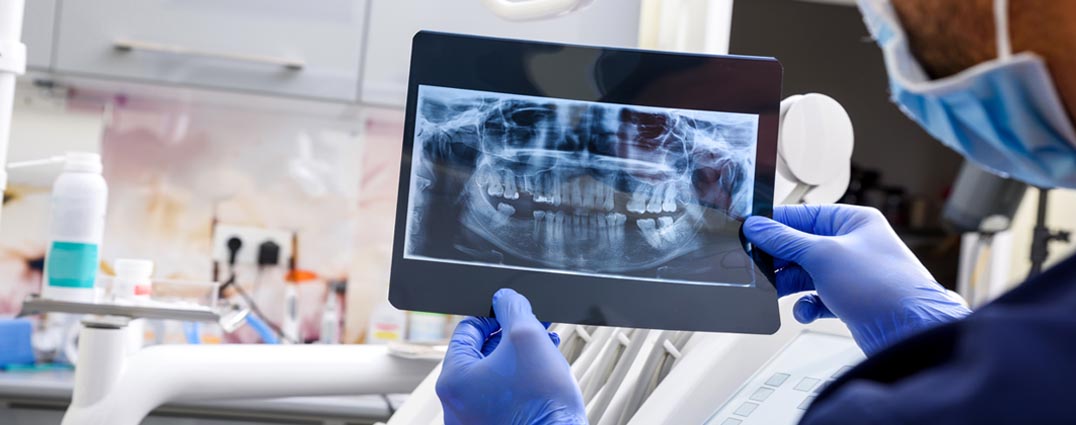
Dental X-rays may reveal decay, infection, fractures, bone changes, impacted teeth, or other conditions that cannot be fully assessed through visual examination alone. The type and number of images should be based on your symptoms, history, current oral health, and clinical findings. MouthHealthy
Once the source of the problem is identified, we explain:
A painful tooth is not automatically an extraction. It is also not automatically savable.
The responsible recommendation depends on the actual condition of the tooth, root, supporting bone, gum tissue, and existing restoration.
A toothache is a symptom—not a diagnosis.
Pain may arise from:
The character of the pain provides useful information.
Brief sensitivity may reflect an exposed root or early decay. Sharp pain during biting can occur with decay, a loose filling, or a fracture. Lingering temperature pain may indicate more significant pulpal damage. Constant pressure, swelling, and tenderness can occur when infection has extended into the tissues surrounding the tooth. American Association of Endodontists
Treatment may include a new filling, protective crown, bite adjustment, root-canal therapy, periodontal treatment, drainage, or extraction, depending on the diagnosis.
Pain medication may temporarily reduce symptoms, but it does not correct the structural or infectious cause.
A tooth can fracture because of trauma, decay, a large filling, grinding, biting on a hard object, or progressive structural fatigue.
Cracked teeth do not always produce constant pain. Symptoms may come and go and may include:
Treatment depends on the depth, direction, and location of the fracture.
A small chip may be restored with bonding or a filling. A fractured cusp may require a new restoration or crown. A crack extending into the pulp may require root-canal therapy and full-coverage protection. If the fracture extends too far beneath the gumline or divides the tooth, extraction may become necessary. American Association of Endodontists
Unlike a broken bone, a cracked tooth does not biologically fuse back together. Treatment is intended to protect the remaining structure, limit progression, restore function, and reduce pain. Even after treatment, the long-term prognosis depends on the extent and direction of the crack. American Association of Endodontists
The earlier a fracture is evaluated, the greater the chance that meaningful tooth structure can be preserved.
A dental abscess develops when infection collects within or around a tooth or its supporting tissues.
Possible signs include:
A dental infection may be painful, but it can also progress with limited discomfort. Ongoing swelling, drainage, or pressure should be evaluated even if the pain temporarily improves. American Association of Endodontists
Depending on the source and severity, treatment may involve:
The definitive treatment must address the source of infection.
Patients often expect an antibiotic prescription when they have tooth pain or localized swelling.
However, antibiotics are not the primary treatment for most pulpal and localized periapical dental conditions in otherwise healthy patients. The American Dental Association recommends prioritizing definitive treatment—such as drainage, pulpal treatment, root-canal therapy, or extraction—rather than relying on antibiotics alone. Antibiotics become more appropriate when there are signs of systemic involvement, such as fever or malaise, or when medical risk factors change the clinical decision. ADA
This distinction matters.
An antibiotic may temporarily reduce bacterial spread, but it does not remove decay, seal a fracture, clean an infected root canal, drain a collection of infection, or eliminate a non-restorable tooth.
Responsible emergency care treats the cause whenever possible.
A knocked-out permanent tooth is time-sensitive.
Handle the tooth only by the crown—the visible chewing portion—not by the root. If it is dirty, gently rinse it with water without scrubbing, scraping, drying, or using chemicals.
When possible, the tooth may be gently repositioned in its socket. If it cannot be reinserted, keep it moist in milk, in the mouth beside the cheek when safe to do so, or in an approved tooth-preservation product. Do not allow the tooth to dry out.
Contact a dentist immediately. The chance of saving the tooth is generally better when treatment occurs quickly, ideally within approximately 30 minutes, although later replantation may still be attempted in some cases. American Association of Endodontists
These instructions apply to a permanent tooth, not a baby tooth.
A traumatic injury may push a tooth sideways, deeper into the socket, or partially out of position without fully knocking it out.
Do not attempt forceful repositioning.
The tooth and surrounding structures should be examined promptly because neighboring teeth, bone, or soft tissue may also have injuries that are not immediately visible.
Treatment may include repositioning, stabilization with a dental splint, monitoring of the pulp, restorative care, root-canal treatment, or extraction depending on the severity of the injury. American Association of Endodontists
A filling may loosen or fracture because of decay, material fatigue, bite pressure, or a crack in the surrounding tooth.
Symptoms can include:
The tooth should be evaluated before simply replacing the filling. If recurrent decay or a fracture has weakened the remaining structure, a larger restoration or crown may be needed.
A temporary restoration may be used when definitive treatment cannot be completed immediately.
Avoid chewing hard or sticky foods on the affected side until the tooth is evaluated.
A crown may detach because the cement has weakened, decay has developed underneath it, or the tooth or foundation has fractured.
Save the crown and bring it to your appointment.
Do not use household glue or other non-dental adhesives. These materials can damage the tooth, irritate the tissue, interfere with proper seating, and complicate treatment.
If the underlying tooth is intact and the crown remains suitable, it may sometimes be cleaned and recemented. If the crown no longer fits, the tooth has decayed, or the supporting structure has fractured, additional treatment may be necessary.
Possible solutions include:
The correct treatment depends on why the crown came off—not merely whether it can be pushed back into place.
A loose or fractured bridge can affect several teeth simultaneously.
Treatment depends on:
A veneer may chip, debond, or fracture. Save any detached piece and avoid biting directly on the affected tooth.
Temporary stabilization may be possible, but the restoration should be examined to determine whether it can be rebonded, repaired, or replaced.
Dental implants cannot develop cavities, but implant restorations and surrounding tissues can still experience urgent complications.
Contact the office if you notice:
It is important to determine whether the movement comes from the crown, bridge, screw, abutment, prosthesis, or implant fixture itself.
These conditions are not interchangeable.
A loose restoration may be repairable. Movement of the implant within the bone is a more serious finding and requires prompt evaluation.
Avoid repeatedly testing or moving the restoration with your tongue or fingers.
Some teeth cannot be predictably preserved.
Emergency extraction may become necessary when a tooth has:
Extraction should still be planned carefully.
When appropriate, we consider how removal may affect the surrounding bone, gum tissue, bite, appearance, and future tooth-replacement options. Depending on the case, treatment may include socket preservation, bone grafting, PRF or PRP, or planning for a bridge, denture, or dental implant.
Removing the source of an emergency is only one part of care. The site should also be managed with the long-term treatment plan in mind.
A fractured denture, damaged clasp, broken denture tooth, or unstable removable appliance can interfere with eating and speaking and may irritate the gums.
Do not attempt to repair a denture with household glue.
A temporary repair may be possible, but the appliance should also be evaluated for:
A repeated fracture may signal that the denture no longer fits properly or that excessive force is concentrated in one area.
Some discomfort after extractions, grafting, implant placement, periodontal surgery, or other procedures is expected.
Contact the office if you experience:
Postoperative concerns should be evaluated in the context of the procedure, timing, medical history, and expected healing course.
Most tooth-related emergencies are best evaluated by a dentist because definitive care must address the dental source.
However, some conditions require hospital-level emergency care.
Call 911 or go to the nearest emergency department if you have:
These findings may involve the airway, deep facial spaces, significant blood loss, or injuries extending beyond the teeth. nhs.uk
When in doubt about a potentially life-threatening condition, err on the side of emergency medical care.
Rinse gently with warm water and floss carefully to remove food that may be trapped between the teeth. Do not place aspirin directly on the tooth or gum because it can irritate or burn the tissue. MouthHealthy
Apply a cold compress externally. Do not apply heat to an area that may be infected.
Rinse gently with warm water. Save any broken pieces and bring them with you. A cold compress may help limit external swelling. MouthHealthy
Handle it by the crown, rinse gently without scrubbing, keep it moist, and seek care immediately. American Association of Endodontists
Keep the restoration in a clean container and bring it to the appointment. Do not use household adhesive.
Apply steady pressure with clean gauze or a clean folded cloth. If bleeding is heavy or does not stop, seek emergency medical care.
Use dental floss gently. Do not use needles, pins, knives, or other sharp instruments. MouthHealthy
Pain relief should be individualized according to medical history, allergies, current medications, kidney and liver health, gastrointestinal history, pregnancy status, and other risk factors.
For many adolescents and adults, nonopioid medicines such as an NSAID—with or without acetaminophen when appropriate—are considered first-line options for temporary management of acute dental pain. These medications are not suitable for everyone, and patients should follow product directions and consult a dentist, physician, or pharmacist when uncertain. ADA
Pain medication may make the symptoms more tolerable, but it does not determine whether the tooth is healthy or remove the underlying cause.
Do not delay evaluation simply because medication temporarily reduces the pain.
Our first question is not, “Can this tooth be removed?”
It is, “Can this tooth be predictably preserved?”
Depending on the condition, tooth-preserving emergency treatment may include:
Preservation should not become an absolute rule.
A tooth with an unfavorable fracture, severe structural loss, advanced periodontal breakdown, or repeated infection may have a poor long-term prognosis even if temporary treatment is technically possible.
The goal is not to save every tooth at any cost.
The goal is to distinguish between a tooth worth preserving and a tooth whose continued treatment would delay a more stable solution.
Some emergency procedures require temporary or permanent restorative materials.
We consider the patient’s:
Material awareness does not mean selecting a material based on fear or marketing.
Infection control, structural stability, biological compatibility, function, and long-term maintainability come first.
When multiple appropriate options exist, we explain the advantages, limitations, and material differences clearly so the patient can make an informed decision.
Emergency dental treatment should address more than the symptom, but it should also remain grounded in evidence.
We consider factors that may influence diagnosis, treatment, and healing, including:
This is the foundation of science-based integrative dental medicine: understanding the patient as a whole person without making exaggerated claims or replacing proven treatment with unsupported alternatives.
Pain and uncertainty can intensify dental anxiety.
We explain the diagnosis before beginning treatment and distinguish between what must be addressed immediately and what can be planned after the emergency is stabilized.
Depending on the situation, care may be divided into phases:
This staged approach can make complex emergency treatment more manageable while preserving sound clinical judgment.
Depending on the diagnosis, your emergency visit may involve:
Not every problem can or should be completed in one visit.
In some cases, the immediate objective is stabilization, followed by definitive restorative or surgical care after pain, infection, or swelling is under control.
We make every reasonable effort to evaluate urgent dental concerns promptly. Appointment availability depends on the schedule, the nature of the emergency, and the treatment required. Call the office and provide as much detail as possible so the team can determine the appropriate timing.
Possibly. Dental radiographs may be necessary to evaluate decay, infection, fractures, bone levels, previous root-canal treatment, implants, or areas that cannot be directly examined. Imaging is selected according to the clinical need. MouthHealthy
Sometimes. Other cases require temporary stabilization, specialist treatment, laboratory work, or a staged treatment plan.
No. Severe pain can occur with a tooth that is still treatable. The decision depends on the fracture, decay, infection, bone support, restorative condition, and long-term prognosis.
Symptoms may temporarily lessen if an abscess drains, but the source of infection generally remains. Evaluation and definitive dental treatment are still necessary. American Association of Endodontists
Usually not by themselves. Most localized pulpal and periapical dental conditions require definitive treatment such as drainage, root-canal therapy, or extraction. Antibiotics are generally reserved for appropriate clinical situations, including systemic involvement or specific medical risks. ADA
Handle a permanent tooth by the crown, rinse it gently if dirty, do not scrub it, keep it moist, and contact a dentist immediately. American Association of Endodontists
Sometimes. The dentist must determine whether the crown still fits and whether the underlying tooth, buildup, or root has been damaged.
For most tooth-related problems without life-threatening symptoms, a dentist is better equipped to provide definitive treatment. Seek emergency medical care for breathing or swallowing difficulty, severe spreading swelling, uncontrolled bleeding, or serious facial and jaw trauma. American Association of Endodontists
Many implant-restoration problems can be evaluated in a dental office. The appropriate treatment depends on whether the issue involves the crown, bridge, screw, abutment, surrounding tissue, bone, or implant fixture.
Dental pain should not be ignored, and urgent treatment should not be rushed without a diagnosis.
At San Diego Integrative & Implant Dentistry, we provide emergency dental evaluation and treatment for toothaches, fractured teeth, infection, swelling, dental trauma, damaged restorations, implant concerns, and teeth that may require urgent extraction.
Our Rancho Bernardo practice serves patients throughout San Diego and North County who value clear answers, meticulous care, and treatment decisions made with the long-term result in mind.Emergency Dentistry in San Diego
Dental emergencies rarely happen at a convenient time.
A tooth may fracture while eating. A crown may come loose before an important event. Pain that was manageable yesterday may become intense overnight. Swelling may appear without warning, or an old dental problem may suddenly become impossible to ignore.
At San Diego Integrative & Implant Dentistry, we provide focused emergency dental care for patients experiencing tooth pain, fractured teeth, swelling, infection, dental trauma, damaged restorations, and other urgent oral-health concerns.
Our approach is calm, diagnostic, and direct.
The first objective is to determine what is happening. The second is to relieve pain, control infection or instability, and protect the surrounding tissues. The third is to establish whether the tooth can be predictably preserved—or whether removal and replacement provide the more responsible long-term solution.
An emergency is not the time for guesswork. It is the time for clear diagnosis and decisive care.
Not every dental problem requires immediate treatment, but certain symptoms should be evaluated promptly.
Contact our office if you are experiencing:
Ongoing pain may be caused by decay, a fracture, inflammation inside the tooth, infection, a loose restoration, bite trauma, or damage to the supporting tissues. Early evaluation often gives the dentist more options for preserving the tooth and preventing the problem from becoming more complicated. American Association of Endodontists
Emergency dentistry should begin with diagnosis—not assumptions.
Your visit may include:
Dental X-rays may reveal decay, infection, fractures, bone changes, impacted teeth, or other conditions that cannot be fully assessed through visual examination alone. The type and number of images should be based on your symptoms, history, current oral health, and clinical findings. MouthHealthy
Once the source of the problem is identified, we explain:
A painful tooth is not automatically an extraction. It is also not automatically savable.
The responsible recommendation depends on the actual condition of the tooth, root, supporting bone, gum tissue, and existing restoration.
A toothache is a symptom—not a diagnosis.
Pain may arise from:
The character of the pain provides useful information.
Brief sensitivity may reflect an exposed root or early decay. Sharp pain during biting can occur with decay, a loose filling, or a fracture. Lingering temperature pain may indicate more significant pulpal damage. Constant pressure, swelling, and tenderness can occur when infection has extended into the tissues surrounding the tooth. American Association of Endodontists
Treatment may include a new filling, protective crown, bite adjustment, root-canal therapy, periodontal treatment, drainage, or extraction, depending on the diagnosis.
Pain medication may temporarily reduce symptoms, but it does not correct the structural or infectious cause.
A tooth can fracture because of trauma, decay, a large filling, grinding, biting on a hard object, or progressive structural fatigue.
Cracked teeth do not always produce constant pain. Symptoms may come and go and may include:
Treatment depends on the depth, direction, and location of the fracture.
A small chip may be restored with bonding or a filling. A fractured cusp may require a new restoration or crown. A crack extending into the pulp may require root-canal therapy and full-coverage protection. If the fracture extends too far beneath the gumline or divides the tooth, extraction may become necessary. American Association of Endodontists
Unlike a broken bone, a cracked tooth does not biologically fuse back together. Treatment is intended to protect the remaining structure, limit progression, restore function, and reduce pain. Even after treatment, the long-term prognosis depends on the extent and direction of the crack. American Association of Endodontists
The earlier a fracture is evaluated, the greater the chance that meaningful tooth structure can be preserved.
A dental abscess develops when infection collects within or around a tooth or its supporting tissues.
Possible signs include:
A dental infection may be painful, but it can also progress with limited discomfort. Ongoing swelling, drainage, or pressure should be evaluated even if the pain temporarily improves. American Association of Endodontists
Depending on the source and severity, treatment may involve:
The definitive treatment must address the source of infection.
Patients often expect an antibiotic prescription when they have tooth pain or localized swelling.
However, antibiotics are not the primary treatment for most pulpal and localized periapical dental conditions in otherwise healthy patients. The American Dental Association recommends prioritizing definitive treatment—such as drainage, pulpal treatment, root-canal therapy, or extraction—rather than relying on antibiotics alone. Antibiotics become more appropriate when there are signs of systemic involvement, such as fever or malaise, or when medical risk factors change the clinical decision. ADA
This distinction matters.
An antibiotic may temporarily reduce bacterial spread, but it does not remove decay, seal a fracture, clean an infected root canal, drain a collection of infection, or eliminate a non-restorable tooth.
Responsible emergency care treats the cause whenever possible.
A knocked-out permanent tooth is time-sensitive.
Handle the tooth only by the crown—the visible chewing portion—not by the root. If it is dirty, gently rinse it with water without scrubbing, scraping, drying, or using chemicals.
When possible, the tooth may be gently repositioned in its socket. If it cannot be reinserted, keep it moist in milk, in the mouth beside the cheek when safe to do so, or in an approved tooth-preservation product. Do not allow the tooth to dry out.
Contact a dentist immediately. The chance of saving the tooth is generally better when treatment occurs quickly, ideally within approximately 30 minutes, although later replantation may still be attempted in some cases. American Association of Endodontists
These instructions apply to a permanent tooth, not a baby tooth.
A traumatic injury may push a tooth sideways, deeper into the socket, or partially out of position without fully knocking it out.
Do not attempt forceful repositioning.
The tooth and surrounding structures should be examined promptly because neighboring teeth, bone, or soft tissue may also have injuries that are not immediately visible.
Treatment may include repositioning, stabilization with a dental splint, monitoring of the pulp, restorative care, root-canal treatment, or extraction depending on the severity of the injury. American Association of Endodontists
A filling may loosen or fracture because of decay, material fatigue, bite pressure, or a crack in the surrounding tooth.
Symptoms can include:
The tooth should be evaluated before simply replacing the filling. If recurrent decay or a fracture has weakened the remaining structure, a larger restoration or crown may be needed.
A temporary restoration may be used when definitive treatment cannot be completed immediately.
Avoid chewing hard or sticky foods on the affected side until the tooth is evaluated.
A crown may detach because the cement has weakened, decay has developed underneath it, or the tooth or foundation has fractured.
Save the crown and bring it to your appointment.
Do not use household glue or other non-dental adhesives. These materials can damage the tooth, irritate the tissue, interfere with proper seating, and complicate treatment.
If the underlying tooth is intact and the crown remains suitable, it may sometimes be cleaned and recemented. If the crown no longer fits, the tooth has decayed, or the supporting structure has fractured, additional treatment may be necessary.
Possible solutions include:
The correct treatment depends on why the crown came off—not merely whether it can be pushed back into place.
A loose or fractured bridge can affect several teeth simultaneously.
Treatment depends on:
A veneer may chip, debond, or fracture. Save any detached piece and avoid biting directly on the affected tooth.
Temporary stabilization may be possible, but the restoration should be examined to determine whether it can be rebonded, repaired, or replaced.
Dental implants cannot develop cavities, but implant restorations and surrounding tissues can still experience urgent complications.
Contact the office if you notice:
It is important to determine whether the movement comes from the crown, bridge, screw, abutment, prosthesis, or implant fixture itself.
These conditions are not interchangeable.
A loose restoration may be repairable. Movement of the implant within the bone is a more serious finding and requires prompt evaluation.
Avoid repeatedly testing or moving the restoration with your tongue or fingers.
Some teeth cannot be predictably preserved.
Emergency extraction may become necessary when a tooth has:
Extraction should still be planned carefully.
When appropriate, we consider how removal may affect the surrounding bone, gum tissue, bite, appearance, and future tooth-replacement options. Depending on the case, treatment may include socket preservation, bone grafting, PRF or PRP, or planning for a bridge, denture, or dental implant.
Removing the source of an emergency is only one part of care. The site should also be managed with the long-term treatment plan in mind.
A fractured denture, damaged clasp, broken denture tooth, or unstable removable appliance can interfere with eating and speaking and may irritate the gums.
Do not attempt to repair a denture with household glue.
A temporary repair may be possible, but the appliance should also be evaluated for:
A repeated fracture may signal that the denture no longer fits properly or that excessive force is concentrated in one area.
Some discomfort after extractions, grafting, implant placement, periodontal surgery, or other procedures is expected.
Contact the office if you experience:
Postoperative concerns should be evaluated in the context of the procedure, timing, medical history, and expected healing course.
Most tooth-related emergencies are best evaluated by a dentist because definitive care must address the dental source.
However, some conditions require hospital-level emergency care.
Call 911 or go to the nearest emergency department if you have:
These findings may involve the airway, deep facial spaces, significant blood loss, or injuries extending beyond the teeth. nhs.uk
When in doubt about a potentially life-threatening condition, err on the side of emergency medical care.
Rinse gently with warm water and floss carefully to remove food that may be trapped between the teeth. Do not place aspirin directly on the tooth or gum because it can irritate or burn the tissue. MouthHealthy
Apply a cold compress externally. Do not apply heat to an area that may be infected.
Rinse gently with warm water. Save any broken pieces and bring them with you. A cold compress may help limit external swelling. MouthHealthy
Handle it by the crown, rinse gently without scrubbing, keep it moist, and seek care immediately. American Association of Endodontists
Keep the restoration in a clean container and bring it to the appointment. Do not use household adhesive.
Apply steady pressure with clean gauze or a clean folded cloth. If bleeding is heavy or does not stop, seek emergency medical care.
Use dental floss gently. Do not use needles, pins, knives, or other sharp instruments. MouthHealthy
Pain relief should be individualized according to medical history, allergies, current medications, kidney and liver health, gastrointestinal history, pregnancy status, and other risk factors.
For many adolescents and adults, nonopioid medicines such as an NSAID—with or without acetaminophen when appropriate—are considered first-line options for temporary management of acute dental pain. These medications are not suitable for everyone, and patients should follow product directions and consult a dentist, physician, or pharmacist when uncertain. ADA
Pain medication may make the symptoms more tolerable, but it does not determine whether the tooth is healthy or remove the underlying cause.
Do not delay evaluation simply because medication temporarily reduces the pain.
Our first question is not, “Can this tooth be removed?”
It is, “Can this tooth be predictably preserved?”
Depending on the condition, tooth-preserving emergency treatment may include:
Preservation should not become an absolute rule.
A tooth with an unfavorable fracture, severe structural loss, advanced periodontal breakdown, or repeated infection may have a poor long-term prognosis even if temporary treatment is technically possible.
The goal is not to save every tooth at any cost.
The goal is to distinguish between a tooth worth preserving and a tooth whose continued treatment would delay a more stable solution.
Some emergency procedures require temporary or permanent restorative materials.
We consider the patient’s:
Material awareness does not mean selecting a material based on fear or marketing.
Infection control, structural stability, biological compatibility, function, and long-term maintainability come first.
When multiple appropriate options exist, we explain the advantages, limitations, and material differences clearly so the patient can make an informed decision.
Emergency dental treatment should address more than the symptom, but it should also remain grounded in evidence.
We consider factors that may influence diagnosis, treatment, and healing, including:
This is the foundation of science-based integrative dental medicine: understanding the patient as a whole person without making exaggerated claims or replacing proven treatment with unsupported alternatives.
Pain and uncertainty can intensify dental anxiety.
We explain the diagnosis before beginning treatment and distinguish between what must be addressed immediately and what can be planned after the emergency is stabilized.
Depending on the situation, care may be divided into phases:
This staged approach can make complex emergency treatment more manageable while preserving sound clinical judgment.
Depending on the diagnosis, your emergency visit may involve:
Not every problem can or should be completed in one visit.
In some cases, the immediate objective is stabilization, followed by definitive restorative or surgical care after pain, infection, or swelling is under control.
We make every reasonable effort to evaluate urgent dental concerns promptly. Appointment availability depends on the schedule, the nature of the emergency, and the treatment required. Call the office and provide as much detail as possible so the team can determine the appropriate timing.
Possibly. Dental radiographs may be necessary to evaluate decay, infection, fractures, bone levels, previous root-canal treatment, implants, or areas that cannot be directly examined. Imaging is selected according to the clinical need. MouthHealthy
Sometimes. Other cases require temporary stabilization, specialist treatment, laboratory work, or a staged treatment plan.
No. Severe pain can occur with a tooth that is still treatable. The decision depends on the fracture, decay, infection, bone support, restorative condition, and long-term prognosis.
Symptoms may temporarily lessen if an abscess drains, but the source of infection generally remains. Evaluation and definitive dental treatment are still necessary. American Association of Endodontists
Usually not by themselves. Most localized pulpal and periapical dental conditions require definitive treatment such as drainage, root-canal therapy, or extraction. Antibiotics are generally reserved for appropriate clinical situations, including systemic involvement or specific medical risks. ADA
Handle a permanent tooth by the crown, rinse it gently if dirty, do not scrub it, keep it moist, and contact a dentist immediately. American Association of Endodontists
Sometimes. The dentist must determine whether the crown still fits and whether the underlying tooth, buildup, or root has been damaged.
For most tooth-related problems without life-threatening symptoms, a dentist is better equipped to provide definitive treatment. Seek emergency medical care for breathing or swallowing difficulty, severe spreading swelling, uncontrolled bleeding, or serious facial and jaw trauma. American Association of Endodontists
Many implant-restoration problems can be evaluated in a dental office. The appropriate treatment depends on whether the issue involves the crown, bridge, screw, abutment, surrounding tissue, bone, or implant fixture.
Dental pain should not be ignored, and urgent treatment should not be rushed without a diagnosis.
At San Diego Integrative & Implant Dentistry, we provide emergency dental evaluation and treatment for toothaches, fractured teeth, infection, swelling, dental trauma, damaged restorations, implant concerns, and teeth that may require urgent extraction.
Our Rancho Bernardo practice serves patients throughout San Diego and North County who value clear answers, meticulous care, and treatment decisions made with the long-term result in mind.
Call our office and explain what happened, when the symptoms began, whether swelling or fever is present, and whether the tooth or restoration has fractured or come loose. Our team will help determine the earliest appropriate appointment or direct you to emergency medical care when necessary.
Call our office and explain what happened, when the symptoms began, whether swelling or fever is present, and whether the tooth or restoration has fractured or come loose. Our team will help determine the earliest appropriate appointment or direct you to emergency medical care when necessary.