Designed Around the Smile, Bite, and Face
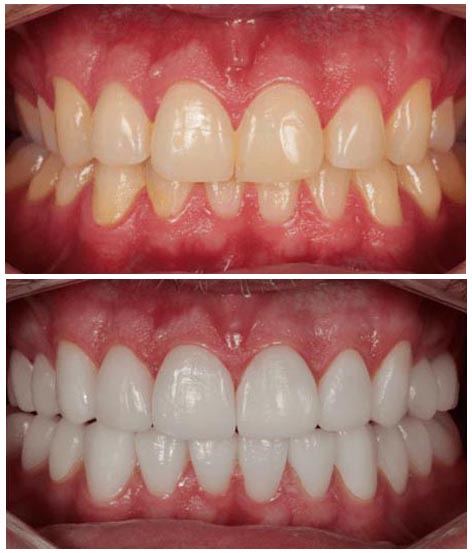
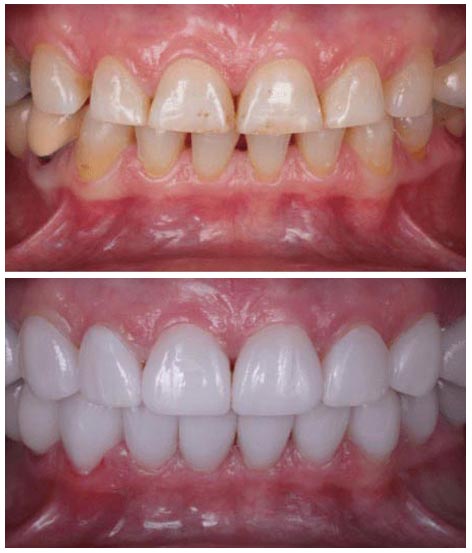
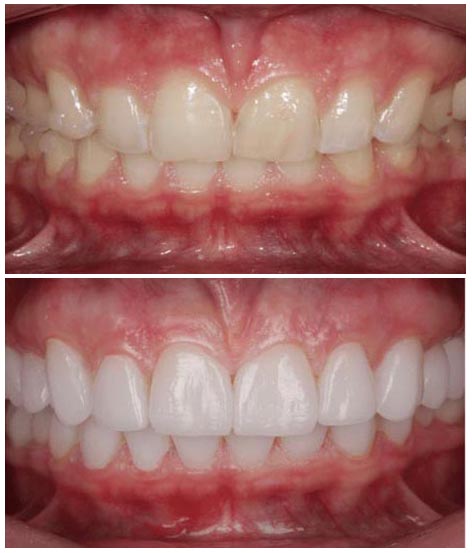
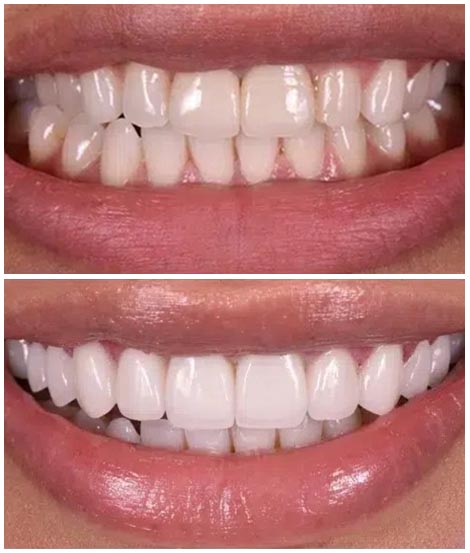
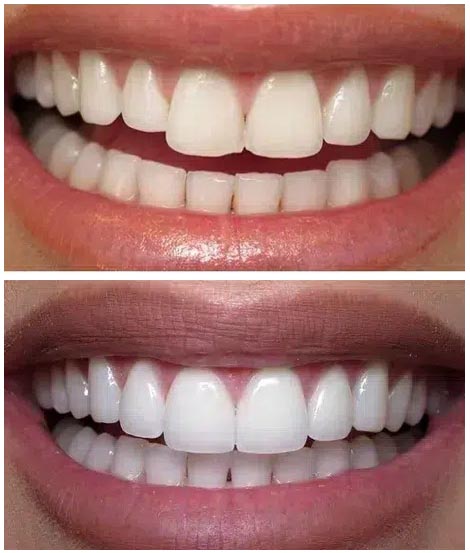
Porcelain veneers can refine the color, shape, length, symmetry, and proportion of the teeth visible within a smile.
But the most convincing veneer cases are not defined by porcelain alone.
They are shaped by the relationship between the teeth and lips, the architecture of the gums, the patient’s facial proportions, the underlying tooth color, the bite, and the amount of natural enamel that can be preserved.
At San Diego Integrative & Implant Dentistry, veneers are designed as part of the patient’s smile—not placed as identical shells over unrelated teeth.
The objective is not simply a whiter smile.
It is a result that appears intentional without looking manufactured.
Porcelain veneers are thin ceramic restorations bonded to the front surfaces of the teeth.
They may be used to refine teeth that are:
A veneer may also extend slightly over the biting edge of the tooth when the treatment plan includes changes in length, wear, or incisal form.
Porcelain provides excellent control over shade, translucency, texture, and surface reflection. The result, however, depends on how those qualities are used.
A veneer can be bright and still look artificial.
Natural esthetics come from proportion and detail.
Not every veneer requires the same amount of tooth preparation.
Traditional veneers generally require controlled enamel reduction to create space for the ceramic.
This helps prevent the final teeth from appearing bulky and gives the ceramist room to create the appropriate shade, contour, and translucency.
The amount of preparation depends on:
Preparation should be deliberate and conservative. The objective is to create enough space for the restoration while preserving as much valuable enamel as the design permits.
No-prep or minimal-prep veneers are ultra-thin ceramic restorations that require little or, in selected cases, no enamel reduction.
They may be appropriate when teeth are:
No-prep veneers are not appropriate for every smile.
Teeth that are prominent, rotated, dark, bulky, or already positioned too far forward may require preparation or another treatment approach to avoid an overcontoured result.
The most conservative option is not automatically the one that removes the least enamel.
It is the one that produces a healthy, functional, and visually coherent result with the least unnecessary intervention.
Porcelain veneers may be appropriate for patients who:
Veneers may not be the first treatment when a patient has:
Orthodontic treatment, whitening, bonding, gum treatment, crowns, or another procedure may provide a better result in certain cases.
A thoughtful consultation does not begin by deciding how many veneers to place.
It begins by determining what the smile actually requires.
The design process may include:
A wax-up or mock-up allows the patient and dentist to evaluate proposed changes in tooth length, width, contour, and overall presence before the definitive ceramic is fabricated.
This stage is particularly valuable when several teeth are being treated.
It allows refinement before the final result becomes permanent.
Porcelain does not respond to teeth-whitening treatment after it has been fabricated.
Shade planning should therefore occur before the final veneers are made.
If you are satisfied with the color of your surrounding natural teeth, the veneers can be custom-matched to blend with them.
If you want a brighter overall smile, the natural teeth can be professionally whitened first. Once the shade has stabilized, the veneers can be designed to coordinate with the new color.
This creates a more cohesive result than making the veneers independently and attempting to match the natural teeth afterward.
The brightest shade is not automatically the most flattering one.
The final color should be considered in relation to the skin, lips, eye color, facial contrast, and the character of the smile being created.
Porcelain veneers are generally completed over two principal treatment appointments following the consultation and planning phase.
The teeth are numbed with local anesthetic when preparation is required.
The dentist removes the controlled amount of enamel needed for the selected design and ceramic. Digital scans or impressions are then taken.
Provisional veneers may be placed while the final restorations are being fabricated.
The provisional phase allows the patient to experience:
The provisional smile can also help guide refinements before the laboratory completes the final veneers.
At the placement appointment, the provisional restorations are removed and the porcelain veneers are evaluated individually and collectively.
The dentist examines:
Once the result has been approved, the teeth and veneers are prepared for adhesive bonding.
The bonding process requires careful isolation, precise surface treatment, controlled cement selection, and detailed removal of excess material around the margins.
The veneer may be thin. The protocol holding it to the tooth is highly technical.
Porcelain veneers commonly last 10 to 15 years, and well-designed, carefully maintained cases may remain functional considerably longer.
Longevity depends on:
Porcelain is resistant to staining, but the natural teeth, gumline, bite, and surrounding restorations can change over time.
No veneer should be considered maintenance-free.
Longevity begins before the porcelain is bonded.
Patients should:
The porcelain cannot develop decay, but the natural tooth beneath and around it can.
Healthy gums and clean margins are part of the esthetic result.
The cost of porcelain veneers varies according to:
A veneer case should not be priced as though the only variable is the number of porcelain shells.
The fee reflects diagnosis, design, preparation, provisional treatment, laboratory communication, bonding, bite adjustment, and maintenance planning.
A personalized estimate is provided after the clinical and esthetic evaluation.
Depending on the concern, alternatives may include:
A patient with healthy tooth shape and isolated discoloration may need whitening rather than veneers. A patient with crowding may benefit from alignment before ceramic treatment. A structurally weakened tooth may require a crown rather than a veneer.
The best cosmetic treatment is the one that respects the condition of the underlying teeth.
At San Diego Integrative & Implant Dentistry, porcelain veneers are designed around the individual patient’s teeth, gums, bite, facial proportions, and desired level of brightness.
The process may include standard veneers, minimal-preparation veneers, no-prep veneers, digital smile planning, provisional treatment, and close collaboration with a dental ceramist.
The visible result matters.
So does the foundation beneath it.
Call (858) 779-9292 to schedule a porcelain-veneer consultation in San Diego.
The procedure is generally comfortable. Local anesthetic is used when tooth preparation is required. Mild sensitivity or gum tenderness may occur temporarily after treatment.
They can. A natural result depends on tooth proportion, translucency, surface texture, line angles, shade, gum contours, and the way the veneers relate to the face.
No. Whitening treatments do not change the color of porcelain. Natural teeth can be whitened first, and the veneers can then be fabricated to coordinate with the brighter shade.
No-prep veneers may preserve more natural enamel, but they should not automatically be described as completely reversible. Removal or replacement still requires professional treatment and may affect the tooth surface.
The number depends on how many teeth are visible when you smile, the location of the concern, and whether neighboring teeth can be matched without treatment. Some patients need one or two veneers; others benefit from a broader smile design.
They require consistent brushing, interdental cleaning, professional maintenance, and protection from grinding or destructive habits. A nightguard may be recommended.