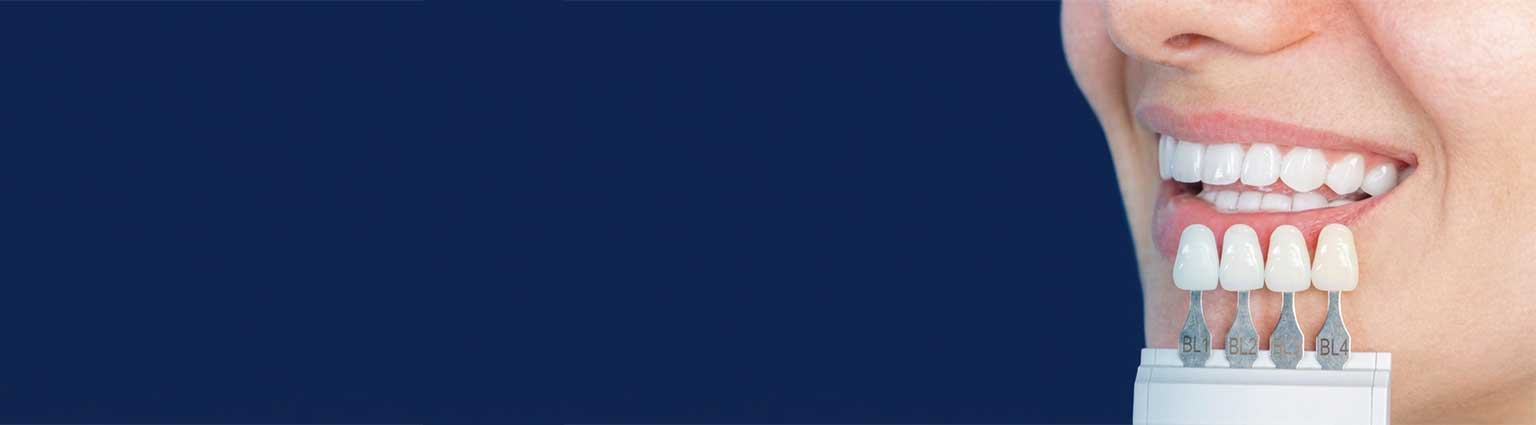
Prepless veneers are ultrathin ceramic restorations designed to refine the appearance of selected teeth without intentionally shaving down the natural enamel.
Their appeal is immediate. Small or narrow teeth can be given more graceful proportions. Spaces can be closed. Worn edges can be restored. A smile can appear fuller, brighter, and more balanced while preserving almost all of the natural tooth beneath the ceramic.
Yet prepless veneers are not simply an easier version of traditional veneers. Because the teeth are not reduced to create additional space, every detail of the design becomes more important. The veneers must add beauty without adding heaviness. Their shape, thickness, color, edge position, and relationship to the gums must be planned with exceptional care.
At San Diego Integrative & Implant Dentistry, prepless veneer treatment is planned and performed by dentists with advanced specialty training in esthetics, ceramics, bite relationships, and complex restorative care.
This experience is especially valuable in an additive treatment, where the quality of the result depends on knowing precisely what to add—and when adding nothing at all would be the wiser choice.
Prepless veneers at our practice currently start at $1,200 per tooth.
What Are Prepless Veneers?
Prepless veneers, also known as no-prep veneers, are very thin ceramic shells bonded to the visible surfaces of the teeth.
Traditional porcelain veneers usually require a controlled amount of enamel reduction to create space for the ceramic. With a true prepless veneer, the natural tooth is not intentionally reduced before the restoration is placed.
This allows the treatment to preserve the enamel while improving selected aspects of the smile, including:
Prepless veneers are most successful when the desired change can be created by adding to the teeth rather than reducing or repositioning them.
That distinction is central to good case selection.
Why Prepless Veneers Require Skill
It is easy to assume that a treatment involving less tooth preparation must also be simpler to perform. In reality, prepless veneers can be among the most demanding cosmetic restorations to design well.
With a traditional veneer, a small amount of enamel may be removed to create room for the ceramic. In a prepless case, that room must already exist within the patient’s smile.
The clinician must determine whether ceramic can be added without making the teeth appear:
A fraction of a millimeter can change the way a tooth catches light, rests against the lip, or relates to the neighboring teeth. The edges must be delicate, the contours must remain natural, and the transition near the gumline should be smooth enough that the veneer feels as though it belongs there.
Prepless veneer treatment therefore requires more than technical ability. It requires restraint, a trained eye, and a clear understanding of facial balance.
The most successful result is not the one that changes every visible detail. It is the one that makes the right changes while preserving the character of the patient’s smile.
Why a Board-Certified Prosthodontist Matters
A prosthodontist is a dental specialist with advanced training in restoring teeth, designing smiles, managing the bite, selecting restorative materials, and coordinating complex cosmetic treatment.
Board certification adds another level of professional evaluation within the specialty.
This background is particularly relevant to prepless veneers because the treatment brings together several areas of expertise:
A prepless veneer may appear delicate, but the decisions behind it are highly detailed.
The prosthodontist must consider how the teeth look at rest, while smiling, and during natural movement. The veneers must also fit within the bite so that they are not exposed to avoidable pressure when the patient chews, speaks, or moves the lower jaw.
This combination of artistry and function is one of the reasons specialist planning can make such a meaningful difference.
Who Is a Good Candidate for Prepless Veneers?
Prepless veneers are especially well suited to patients whose teeth would benefit from added shape, width, length, or volume.
A strong candidate may have:
They may also be appropriate when a patient wants a subtle improvement rather than a dramatic redesign.
For example, a narrow lateral incisor may be widened to improve symmetry. A small space may be closed without moving the teeth. Worn front edges may be restored to create a softer and more youthful outline.
In these situations, an additive restoration can make a meaningful esthetic change while preserving the natural tooth.
When Another Treatment May Create a Better Result
The skill involved in prepless veneers includes recognizing when they are not the best option.
They may be less suitable when the teeth are already prominent, crowded, or angled forward. Adding ceramic to teeth that do not have enough space can make the smile look heavy or overcontoured.
Another approach may also be preferable when a patient has:
Depending on the concern, the prosthodontist may recommend Invisalign, professional whitening, composite bonding, minimal-preparation veneers, conventional porcelain veneers, ceramic crowns, or a combination of treatments.
Sometimes a small amount of selective preparation produces a more natural and maintainable result than insisting on a completely prepless approach. The goal is not to earn the label “no-prep” at any cost. It is to preserve tooth structure while creating a smile that looks refined and functions comfortably.
Prepless Veneers Versus Minimal-Prep Veneers
The terms prepless, no-prep, and minimal-prep are sometimes used as though they mean exactly the same thing.
A true prepless veneer is bonded without intentional enamel reduction.
A minimal-preparation veneer involves a very small amount of selective contouring. This may be used to smooth an uneven area, create a more natural path for the ceramic, prevent excess thickness, or refine the margin near the gumline.
Both approaches are highly conservative compared with a full crown.
The most appropriate design depends on the starting position of the teeth and the result the patient would like to achieve. A patient may arrive expecting completely prepless treatment and discover that minimal preparation would produce a more delicate result. Another patient may be an excellent candidate for a purely additive design.
The recommendation should follow the tooth, not the terminology.
What Can Prepless Veneers Change?
Prepless veneers can be used to make subtle or more noticeable improvements, depending on the number of teeth treated and the amount of space available.
They may be used to:
Because no tooth structure is intentionally removed, prepless veneers are particularly suited to changes that involve adding volume.
They do not physically move the roots or correct significant tooth-position problems. Invisalign may be recommended first when alignment would create a better foundation for the veneers or allow fewer teeth to be treated.
Creating a Natural-Looking Result
Natural teeth are not perfectly flat, identical, or uniformly white.
They have gentle changes in shade, small variations in shape, fine surface texture, and differences in translucency near the edges. These details affect the way light moves across the smile.
A well-designed prepless veneer must reflect those qualities while remaining extremely thin.
The prosthodontist considers:
Some patients prefer a highly natural result with subtle shade variation. Others want a brighter and more polished appearance. Both can be beautiful when the design suits the patient’s features and is carried through consistently.
The aim is not to place the same smile on every face. It is to create a result that appears personal.
Planning Your Prepless Veneers
The process begins with a detailed cosmetic and restorative evaluation.
The consultation may include:
A mock-up can allow the patient to preview changes in tooth length, width, and overall smile fullness before the final veneers are created.
This stage is particularly important with prepless veneers because the design is additive. The patient and prosthodontist can assess whether the proposed changes feel elegant and natural or whether any area appears too full.
The design can then be refined before the ceramic is made.
The Prepless Veneer Procedure
Ceramic Design and Fabrication
After the treatment plan is approved, the final veneers are created from an ultrathin dental ceramic selected for its appearance, strength, and ability to bond to enamel.
The prosthodontist communicates the desired shape, shade, translucency, texture, and proportions to the dental laboratory.
Each veneer is made for a specific tooth. Even when several teeth are treated, the restorations should not appear identical. Small variations help the smile retain a natural character.
Veneer Try-In
Before bonding, the veneers are placed temporarily on the teeth so the prosthodontist can evaluate:
The patient can also view the proposed result before the veneers are permanently bonded.
Bonding the Veneers
The teeth are carefully cleaned and isolated. The enamel and ceramic surfaces are prepared for adhesive bonding, and each veneer is placed with a resin cement selected to support the intended shade.
Any excess material is removed, the edges are polished, and the bite is checked in several positions.
Because little or no enamel is removed, many patients experience minimal sensitivity. Local anesthetic may still be used when needed for comfort or when a small amount of selective contouring is part of the plan.
Will Prepless Veneers Look Bulky?
Well-designed prepless veneers should not look bulky.
Avoiding excess thickness depends on selecting the right patient and controlling the shape of the ceramic with great care. Teeth that are naturally small, slightly recessed, narrow, or separated by spaces often provide room for an additive restoration.
Teeth that already sit forward may not.
The prosthodontist studies the tooth position, lip support, gumline, bite, and amount of available space before recommending treatment. This is one of the most important parts of the consultation, because a technically thin veneer can still look heavy if it is placed on the wrong tooth.
The beauty of prepless treatment comes from adding only what the smile can carry gracefully.
How Long Do Prepless Veneers Last?
Prepless ceramic veneers are designed as long-term restorations. With careful case selection, precise bonding, a stable bite, and good maintenance, they may last 10 to 15 years or longer.
Their lifespan is influenced by:
One of the strengths of prepless treatment is that the veneers are bonded almost entirely to enamel. Enamel provides a reliable bonding surface when it is healthy and properly prepared.
No veneer should be considered maintenance-free. The ceramic cannot develop a cavity, but the natural tooth around and beneath it still requires daily care.
How to Care for Prepless Veneers
Patients should:
The edges of the veneers and the surrounding gum tissue should be checked periodically so that small concerns can be addressed early.
Can Prepless Veneers Be Whitened?
Ceramic veneers do not change color with whitening treatment.
If you are satisfied with the natural shade of the surrounding teeth, the veneers can be custom-matched to blend with them.
If you would prefer a brighter overall smile, professional whitening can be completed first. Once the natural tooth shade has stabilized, the veneers can be designed to coordinate with the brighter color.
Planning the shade in this order helps create a more unified result.
Are Prepless Veneers Reversible?
Because the teeth are not intentionally reduced, prepless veneers preserve far more natural enamel than traditional veneer or crown treatment.
This may leave more options available if the restorations require replacement or modification in the future. However, the enamel is still conditioned for bonding, and removing a veneer requires professional care.
Prepless veneers should therefore be viewed as a long-term restorative decision rather than a temporary cosmetic covering.
Their greatest advantage is preservation, not a promise that the teeth can always be returned to their exact original condition.
How Much Do Prepless Veneers Cost in San Diego?
Prepless veneers at San Diego Integrative & Implant Dentistry currently start at $1,200 per tooth.
The final cost depends on:
A single veneer used to improve one undersized tooth requires a different level of planning from a full visible-smile treatment.
A personalized estimate is provided after the prosthodontist evaluates the teeth, bite, gums, and proposed design.
Prepless Veneers in San Diego
Prepless veneers offer a refined way to improve selected smiles while preserving nearly all of the natural enamel.
Their success depends on far more than using a thin piece of ceramic. The teeth must have the right position and proportions for an additive treatment. The veneers must be designed with restraint, bonded precisely, and shaped around the patient’s face, gumline, speech, and bite.
At San Diego Integrative & Implant Dentistry, prepless veneer treatment is led by a board-certified prosthodontist whose specialty training brings esthetics, ceramic materials, function, and long-term restorative planning into the same design process.
We welcome patients from San Diego, Rancho Bernardo, 4S Ranch, Poway, Escondido, Rancho Santa Fe, Del Mar, Orange County, Los Angeles, and surrounding communities.
Call (858) 779-9292 to schedule a prepless veneer consultation.
Frequently Asked Questions About Prepless Veneers
Are prepless veneers the same as no-prep veneers?
Yes. The terms generally describe ultrathin ceramic veneers placed without intentionally removing enamel. Minimal-prep veneers are slightly different because a small amount of selective contouring may be performed.
Do prepless veneers require shaving the teeth?
A true prepless veneer does not require intentional enamel reduction. Some patients may benefit from very minor contouring to prevent bulk or improve the final fit, in which case the treatment would be more accurately described as minimal-preparation.
Do prepless veneers look bulky?
They should not look bulky when the patient is carefully selected and the veneers are designed correctly. Small, narrow, spaced, or slightly recessed teeth often provide the room needed for an additive restoration.
What can prepless veneers correct?
They may close small spaces, widen narrow teeth, lengthen worn edges, improve symmetry, repair minor chips, and create a fuller smile. They are less suitable for severe crowding, prominent teeth, major structural damage, or very dark discoloration.
How long do prepless veneers last?
Prepless ceramic veneers may last 10 to 15 years or longer with precise bonding, a stable bite, good oral hygiene, and regular maintenance. Patients who grind or clench may need a protective nightguard.
Why have prepless veneers placed by a board-certified prosthodontist?
Prepless veneers require careful control of tooth proportion, ceramic thickness, shade, gumline contours, and the bite. A board-certified prosthodontist has advanced specialty training in restorative esthetics and has completed additional professional evaluation of their knowledge and clinical skill.
Can prepless veneers be whitened?
No. Ceramic does not respond to whitening treatment. Natural teeth can be whitened first, and the veneers can then be made to coordinate with the new shade.
How much do prepless veneers cost?
Prepless veneers at our practice currently start at $1,200 per tooth. The final fee depends on the number of veneers, ceramic, treatment complexity, laboratory process, bite, and any additional care needed before placement.